Alka Melt Drops Official Website › Blog › Motherwort: The One Human Study
Motherwort: What The One Human Study Actually Shows
Motherwort is the fifth of this product’s seven named botanicals, and it has the thinnest clinical record of any of them. A search of the published literature turns up exactly one human trial — open-label, fifty patients, no placebo arm — sitting above a foundation of receptor-binding assays and animal studies. Here is what that one study measured, and what it did not.

- Motherwort (Leonurus cardiaca) has exactly one published human study: an open-label trial in fifty patients with hypertension and anxiety or sleep disturbance, run at 1,200 mg a day of a Leonurus oil extract for 28 days.
- That study had no placebo group, so its improvement figures cannot be separated from expectation, natural fluctuation, or the passage of four weeks.
- Below it sits laboratory work: GABA-receptor binding assays, animal sedative and anxiolytic studies, and phytochemistry reviews. Real research, but not human trial evidence.
- Nothing in this literature measured appetite, weight or metabolism, which are the claims most often attached to a “calming” botanical on a metabolism-positioned product.
- This pack sheet gives no dose for motherwort, so even the 1,200 mg figure from the one human study cannot be checked against this bottle.
The plant, and why it is named “cardiaca”
Leonurus cardiaca is a member of the mint family, native across Europe and central Asia and long used in traditional herbal medicine for heart palpitations, anxiety and menstrual complaints — a use old enough that it gave the plant its Latin species name. This pack sheet lists it simply as “Motherwort Extract,” with no part specified and no standardisation marker, which is common for this plant: unlike hawthorn or horse chestnut, motherwort does not have an established standardised-extract convention the way procyanidins or aescin do for those two.
That absence of a standard marker is itself informative. It usually means a plant’s clinical literature has not matured to the point where regulators or researchers converged on one compound class to standardise against, and motherwort’s research base bears that out.
The one human study: design and result
A 2011 paper in Phytotherapy Research by Shikov and colleagues is, as far as a search of the published record shows, the only human clinical study of Leonurus cardiaca extract on record. Fifty patients with stage 1 or stage 2 arterial hypertension, each also reporting anxiety and sleep disturbance, were treated with 1,200 mg a day of Leonurus oil extract (LOE) for 28 days.
The paper reports the results using the Clinical Global Impression scale: significant improvement in anxiety and depression symptoms in 32% of patients, moderate improvement in 48%, weak effect in 8%, and no response in 12%. Patients with stage 1 hypertension showed improvement roughly a week earlier than those with stage 2. Side effects were reported as minimal across groups.
| Detail | What the study reported |
|---|---|
| Design | Open-label clinical study, no placebo or control arm described |
| Patients | 50, arterial hypertension stage 1–2, with anxiety and sleep disturbance |
| Dose | 1,200 mg/day Leonurus oil extract (LOE) |
| Duration | 28 days |
| Outcome tool | Clinical Global Impression (CGI) scale, investigator/patient-rated |
| Result | 32% significant improvement, 48% moderate, 8% weak, 12% no response, on anxiety/depression symptoms |
One study, one dose, twenty-eight days. This is the entire human clinical record for this plant.
Read the Alka Melt Drops research beside every name
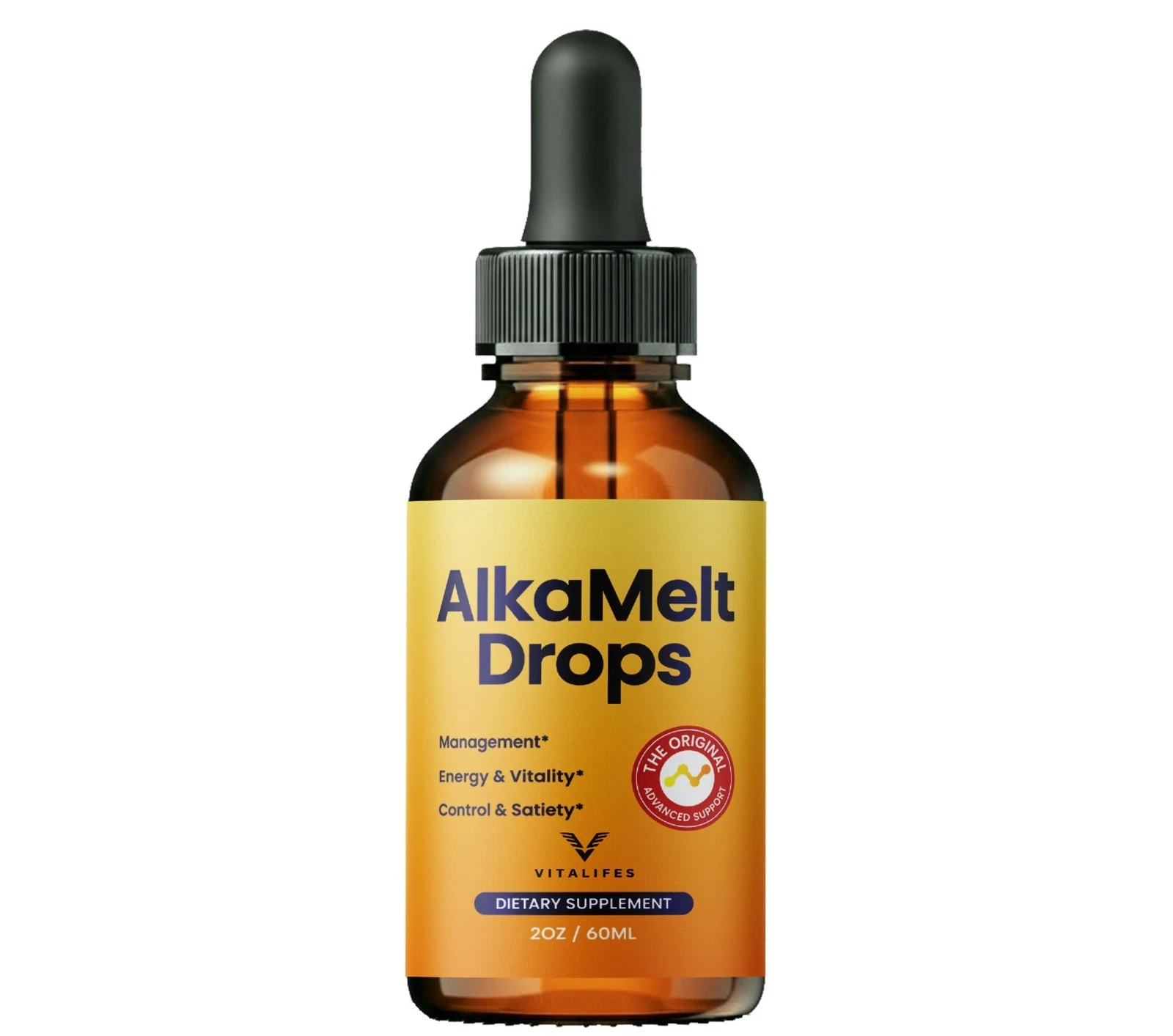
Seven botanicals on the retail pack sheet, and the size of the human evidence behind each one printed next to it — whether that is a 2,681-patient trial or a single fifty-patient study. A 2 fl oz / 60 mL amber glass dropper bottle, with the pack price at the seller’s checkout.
Price at checkout · one-time payment · money-back guarantee as printed on the listing
Order Alka Melt Drops On The Official Website2 fl oz / 60 mL amber glass dropper bottle · lot ALK-26/TH-2256
Why an open-label design is a real limitation
This is worth explaining rather than just flagging, because “open-label” is easy to skim past. In a placebo-controlled trial, one group receives the treatment and a second, otherwise identical group receives an inert look-alike, and neither the patients nor (ideally) the assessors know which is which until the end. That design exists because people who know they are being treated, and clinicians who know a patient is being treated, both tend to report improvement — a real, well-documented effect that has nothing to do with the treatment itself.
The Shikov study had no such comparison group. Every one of the fifty patients knew they were taking Leonurus oil extract, and there was no inert-extract group to subtract that expectation effect from. Anxiety and sleep-disturbance symptoms are also known to fluctuate on their own over four weeks, and a hypertension diagnosis followed by any kind of clinical attention and monitoring can itself produce measurable improvement, independent of what is in the bottle.
None of this means the reported improvement is fake. It means the study cannot tell a reader how much of that 32%-significant / 48%-moderate result belongs to the extract, and how much belongs to attention, expectation and time. That is precisely the gap a placebo arm exists to close, and this literature does not yet have one.
What sits below the human study
Beneath that one open-label trial is a real, if preliminary, laboratory literature. A 2015 study in Planta Medica used GABA-A receptor binding assays to test standardised Leonurus cardiaca and L. japonicus extracts and their isolated compounds directly against the receptor class most sedative and anti-anxiety drugs act on — in vitro work, not a human outcome, but a plausible mechanism.
A 2021 study in Plants (Basel) examined modified dry extracts of motherwort for psychotropic activity, again largely at the level of phytochemical characterisation and preclinical testing rather than a human trial. A 2013 review in Phytotherapy Research summarised the plant’s phytochemistry and pharmacology as a whole, describing a body of animal and in vitro sedative, anxiolytic and cardiotonic research spanning several decades, alongside the near-total absence of controlled human trials. A 2024 paper in Nutrients characterised motherwort, alongside hawthorn and several other botanicals, using in vitro and ex vivo animal-tissue methods for cardiovascular relevance — again, mechanistic groundwork rather than a clinical result in people.
Read together, this is a coherent, unfinished research programme: real pharmacological plausibility, a traditional-use history that long predates modern trial design, and one small, uncontrolled human study standing at the very top of it.
What none of this literature measured
This is the point most worth carrying away from this page. The Shikov trial measured psycho-emotional symptoms and blood pressure in people already diagnosed with hypertension. The laboratory studies measured receptor binding, sedative behaviour in animal models, and phytochemical content. Not one of these studies, at any tier, measured appetite, body weight, fat mass or metabolic rate.
That matters specifically on a product positioned, in places, around weight management. A calming, sedative-leaning botanical can plausibly matter to someone whose eating is driven by stress or poor sleep — that is a reasonable hypothesis — but it is a hypothesis this literature has not tested. No trial anywhere in motherwort’s published record has put a scale, a calorie count or a body-composition measurement in front of a participant.
How this compares with the better-evidenced names on the same list
Context matters here, and this desk has covered both ends of the range this pack sheet spans. Horse chestnut, two names down the same list, has a Cochrane-pooled review, a mechanistic transcapillary-filtration study and multiple placebo-controlled trials behind it, all converging on a single dose figure. Chinese hawthorn sits in between: a large, well-designed trial literature exists for the plant genus, but it was built on a different species and part than the one this bottle names.
Motherwort sits at the other end from horse chestnut. It is not that the plant has been studied and found wanting — the human evidence has simply not been built yet, beyond one uncontrolled trial. That is a different, and more honest, statement than either “proven” or “debunked,” and it is the one this literature actually supports.
Reading a motherwort row on any label
Three questions, and they take under a minute.
- Is a weight given? The one human trial used 1,200 mg a day of a specific oil extract. Without a milligram figure, no comparison is possible at all.
- Is the preparation type specified? “Leonurus oil extract” is not the same manufacturing process as a dry powdered extract or a tincture, and the one human trial used the oil form specifically.
- Is a claim being made that the evidence does not support? Sedative, anxiolytic and cardiotonic claims have some laboratory and traditional-use grounding. Metabolic or weight-related claims for motherwort specifically have none in the published human literature.
Motherwort has one small, uncontrolled human study behind it. Other names on other bottles in this category carry none at all. Reading the exact size and design of what evidence does exist, rather than treating “there’s research” as a single undifferentiated fact, is the whole skill this desk is trying to teach across every one of these pages.
What that means for this bottle
This pack sheet names motherwort with no part, no weight and no preparation type. So even setting aside the open-label limitation of the one human study, there is no dose printed here to compare against the 1,200 mg a day that study used.
What can be said honestly: motherwort is a real, traditionally used botanical with a plausible pharmacological rationale and one small positive signal in an uncontrolled human trial. What cannot be said honestly, on the basis of anything published, is that a specific amount of it in this dropper will replicate that signal, or that it does anything measurable for appetite or weight. This site’s ingredients page carries the same distinction for every one of the seven named botanicals.
References
- Shikov AN, Pozharitskaya ON, Makarov VG, Demchenko DV, Shikh EV. Effect of Leonurus cardiaca oil extract in patients with arterial hypertension accompanied by anxiety and sleep disorders. Phytother Res. 2011;25(4):540-3. PMID 20839214. https://pubmed.ncbi.nlm.nih.gov/20839214/
- Rauwald HW, Savtschenko A, Merten A, Rusch C. GABAA Receptor Binding Assays of Standardized Leonurus cardiaca and Leonurus japonicus Extracts as Well as Their Isolated Constituents. Planta Med. 2015;81(12-13):1103-10. PMID 26218338. https://pubmed.ncbi.nlm.nih.gov/26218338/
- Koshovyi O, Raal A, Kireyev I, Tryshchuk N, et al. Phytochemical and Psychotropic Research of Motherwort (Leonurus cardiaca L.) Modified Dry Extracts. Plants (Basel). 2021;10(2):230. PMID 33503956. https://pubmed.ncbi.nlm.nih.gov/33503956/
- Wojtyniak K, Szymański M, Matławska I. Leonurus cardiaca L. (motherwort): a review of its phytochemistry and pharmacology. Phytother Res. 2013;27(8):1115-20. PMID 23042598. https://pubmed.ncbi.nlm.nih.gov/23042598/
- Witkowska A, Gryn-Rynko A, Syrkiewicz P, Kitala-Tańska K. Characterizations of White Mulberry, Sea-Buckthorn, Garlic, Lily of the Valley, Motherwort, and Hawthorn as Potential Candidates for Managing Cardiovascular Disease-In Vitro and Ex Vivo Animal Studies. Nutrients. 2024;16(9):1291. PMID 38732560. https://pubmed.ncbi.nlm.nih.gov/38732560/