Alka Melt Drops Official Website › Choosing a formula
Choosing a formulaChoosing A Metabolism Supplement: Seven Checks
Seven questions, each answerable from a label and a browser tab in about five minutes, and none of them requiring any chemistry. They are ordered so the ones that decide the most come first. At the end the same seven are applied to the product this website sells, failures first.
A scorecard you can carry to any bottle in this category, and then watch being used on ours.
Why a scorecard beats an opinion
What a fixed set of questions does that a review cannot.
Every website in this category will tell you its product is a good one. Very few will tell you what would have to be true for that to be checkable, which is the more useful thing and the harder one to write.
A scorecard fixes the questions before the answers are known. That is its whole value: the same seven checks run on every bottle, with the score falling where it falls. A list of criteria invented after looking at a product is a description of that product, not a test of it.
Run these on three bottles and a pattern appears quickly. The products that pass the first two checks are a small minority of the category, and they are not always the expensive ones.
The seven checks
Ordered by how much each one decides, and all seven answerable without chemistry.
1. Is there a Supplement Facts panel at all?
Look at the back or side of the bottle in the seller’s own photography, at full size. A panel is a boxed table with a serving size at the top and rows beneath it. If the only label surface photographed anywhere is the front, that is itself the answer, and it is the single most informative thing you will learn about the product in this exercise.
2. Is an amount printed against every name?
A row with a name and no milligram figure cannot be compared to anything. A proprietary blend that gives one total for eight ingredients is the same problem wearing a better suit: the total tells you nothing about the split, and the split is where the entire question lives.
3. Does one ingredient list exist, or several?
Search the product name and read the first four results properly. If the seller’s own artwork, the retail sheet and two stockists give different lists, the product has no settled formula in public, and every claim built on a named ingredient inherits that uncertainty.
4. Does the dose match the research?
Take the two or three leading names and find the trial dose. The abstract usually carries it in one sentence. Then compare. A tenth of the researched amount is a gesture towards an ingredient rather than a dose of it, and the comparison takes about a minute per name.
5. Is the plant part or the form named?
Root and leaf are different ingredients with different chemistry, and extract and whole seed behave differently in trials. A label that prints the part in brackets is doing more than most of this category bothers with, and it is also the only way check four can be run honestly.
6. Is there a refund route with a person behind it?
A telephone number that a human answers, a stated return address, and a window whose length is published somewhere you can read before paying. A guarantee whose length only appears after checkout is a guarantee you accepted without reading, whatever it turns out to say.
7. Does the marketing claim more than the label?
Hold the front wrap against the advertising artwork. Where the artwork asserts things the bottle does not, the bottle is the document the manufacturer stands behind and the artwork is the one it does not. The gap between them is the most reliable single measure of how a seller behaves.
The seven checks applied to Alka Melt Drops
Seven checks, seven answers, and the three failures named before the pass.
| Check | Answer | What it means |
|---|---|---|
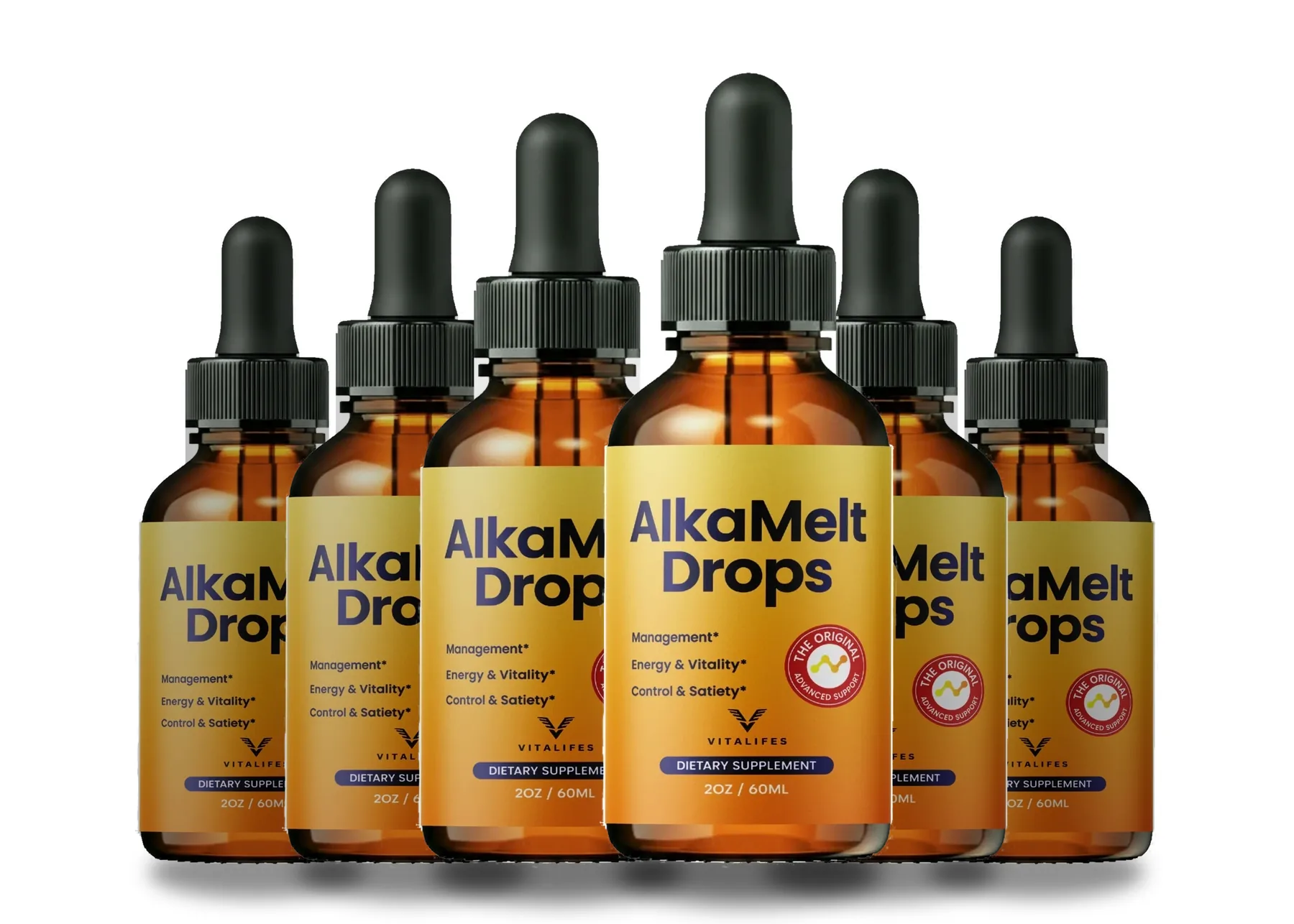
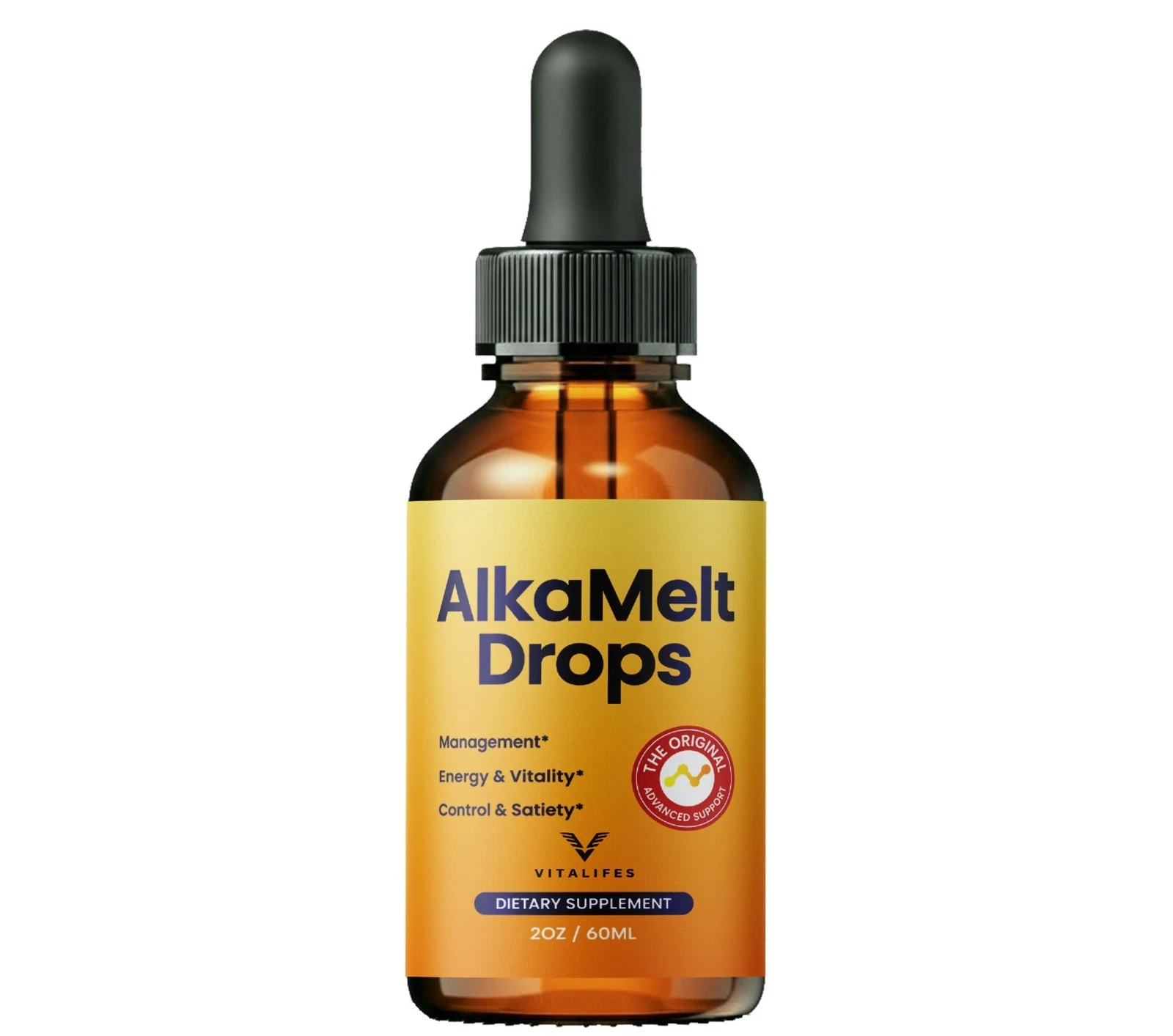
| 1. Supplement Facts panel | No | Every image in the seller’s pack was read at full resolution and the front wrap is the only label surface photographed on any of them |
| 2. Amount against every name | No | No figure is stated for any ingredient on any of the four published lists |
| 3. One ingredient list | No | Four lists exist, naming 17 distinct ingredients between them, and the pack sheet’s 7 appear on none of the others |
| 4. Dose matches the research | Cannot be run | Check four needs the answer to check two. The trial dose is known for every name; the label column is the one that is empty |
| 5. Plant part or form named | Partly | The retail pack sheet names the part for five of its seven botanicals. The seller’s artwork names the part for none of its four |
| 6. Refund route with a person | Yes | A telephone desk on +1 (302) 200-3480, a stated returns address, and a published five-step process. The window’s length is the listing’s |
| 7. Marketing matches the label | No | The wrap prints three support lines. The seller’s artwork asserts seven further things, including a ratio defined nowhere |
Three clear failures, one check that cannot be run at all, one partial and one clear pass. The seventh is the one that should weigh most.
That is a poor score and it is printed here rather than on a page nobody reads. It is worth being precise about what it measures: it measures disclosure, not quality. A bottle can contain exactly what the pack sheet says and still fail six of these checks, because every one of them is about what a buyer is able to verify before paying.
The single check that would change the most is the second. An amount printed against each name would make check four runnable, would settle check three by implication, and would let every research comparison on this website be completed rather than left half-finished on the ingredients page.
What Alka Melt Drops is not being accused of
Three conclusions the score does not support, stated so they are not drawn.
A scorecard is only useful if it stays inside what it measures. Three things do not follow from the score above and should not be read into it.
It does not follow that the bottle contains something other than what the pack sheet says. No analysis of this product exists in public, in either direction, and this desk holds none. What the score says is that a buyer cannot check, not that there is something to find.
It does not follow that the ingredients are poorly chosen. Four of the seven on the pack sheet are the standard phlebotonic quartet and their evidence is genuinely good evidence, just evidence for a different outcome. That is a question about what the bottle is sold for rather than about what is in it.
And it does not follow that the seller behaves badly on the parts of the transaction it does control. Check six is a clear pass: a telephone desk with a person on it, a stated returns address and a published process is more than a good deal of this category offers, and it is the part of the arrangement a buyer relies on when something goes wrong.
Using the same seven checks on any other bottle
What each answer looks like when you take the scorecard somewhere else.
Signs a label is built to be checked
- A panel photographed at full size in the seller’s own images
- A milligram figure against every named ingredient, with no blend total standing in for eight of them
- One ingredient list, the same on the bottle, the artwork and every stockist
- The plant part or the extract form in brackets after the name
- A published refund window you can read before you pay, with a telephone number behind it
Signs it is built to be admired
- Only a front wrap in every photograph, at every resolution
- A proprietary blend total, or a list of names with nothing beside them
- Two or more lists that share no names, with no explanation of which reaches the bottle
- Bare plant names, so that no trial can be matched to any row
- A guarantee whose length appears for the first time after payment
Neither column is a verdict on a product. Both are a verdict on how much of a product you are able to assess before spending anything, which is the only thing a reader on a website can actually assess.
Run the seven on the next three bottles you meet, whoever sells them. The exercise takes a quarter of an hour in total and it changes what the packaging in this category looks like permanently.
What this scorecard cannot tell you
Three questions the seven checks were never built to answer.
It cannot tell you whether a product will suit you. That depends on what else you take, what else is going on, and a conversation with whoever prescribes your medicines if you take any. Hawthorn and digoxin is the named example on this website, and it is a conversation rather than a calculation.
It cannot tell you whether an ingredient works, only whether you have been given enough to find out. The field-wide review is the better guide to that question, and the companion guide walks each name against its own research.
And it cannot replace reading the bottle that arrives. The front wrap sets the serving and the storage instruction, and where a website and a bottle disagree, the bottle is the document that came out of the factory.
Sources behind these seven checks
The records that make each check worth running, including the two behind check two.
- Crawford C, Avula B, Lindsey AT, et al. Label Accuracy and Quality of Select Weight-Loss Dietary Supplements Sold on or near US Military Bases. Nutrients. 2024;16(24):4326. PMID 39770990. https://pubmed.ncbi.nlm.nih.gov/39770990/
- Andrews KW, Gusev PA, Dwyer JT, et al. Dietary Supplement Ingredient Database (DSID) and the Application of Analytically Based Estimates of Ingredient Amount to Intake Calculations. J Nutr. 2018;148(suppl_2):1413S-1421S. PMID 31505677. https://pubmed.ncbi.nlm.nih.gov/31505677/
- Halegoua-DeMarzio D, Navarro VJ, Ahmad J, et al. Investigation of the Role of Chemical Analysis in Causality Assessment of Herbal and Dietary Supplement-Induced Liver Injury. Drug Saf. 2025;48(2):143-150. PMID 39354283. https://pubmed.ncbi.nlm.nih.gov/39354283/
- Batsis JA, Apolzan JW, Bagley PJ, et al. A Systematic Review of Dietary Supplements and Alternative Therapies for Weight Loss. Obesity (Silver Spring). 2021;29(7):1102-1113. PMID 34159755. https://pubmed.ncbi.nlm.nih.gov/34159755/
- Pittler MH, Ernst E. Horse chestnut seed extract for chronic venous insufficiency. Cochrane Database Syst Rev. 2012;11(11):CD003230. PMID 23152216. https://pubmed.ncbi.nlm.nih.gov/23152216/
- Vanscheidt W, Jost V, Wolna P, et al. Efficacy and safety of a Butcher's broom preparation (Ruscus aculeatus L. extract) compared to placebo in patients suffering from chronic venous insufficiency. Arzneimittelforschung. 2002;52(4):243-50. PMID 12040966. https://pubmed.ncbi.nlm.nih.gov/12040966/
- Tankanow R, Tamer HR, Streetman DS, et al. Interaction study between digoxin and a preparation of hawthorn (Crataegus oxyacantha). J Clin Pharmacol. 2003;43(6):637-42. PMID 12817526. https://pubmed.ncbi.nlm.nih.gov/12817526/
Score Alka Melt Drops yourself, then decide
Every answer in the table above is checkable from this website and the seller’s own images. The pack price and the money-back window are shown at the checkout.
Price at checkout · one-time payment · money-back guarantee as printed on the listing
Order Alka Melt Drops On The Official Website2 fl oz / 60 mL amber glass dropper bottle · lot ALK-26/TH-2256