Alka Melt Drops Official Website › Blog › Chinese Hawthorn: The Species Question
Chinese Hawthorn: The Species The Trials Actually Used
The pack sheet names “Chinese Hawthorn Extract (fruit).” The randomised trial base behind hawthorn’s reputation — a 2,681-patient heart failure study among them — was run on a different species, a different plant part, and a different chemical fraction. That gap is not a technicality. It is the whole question a label like this one raises.
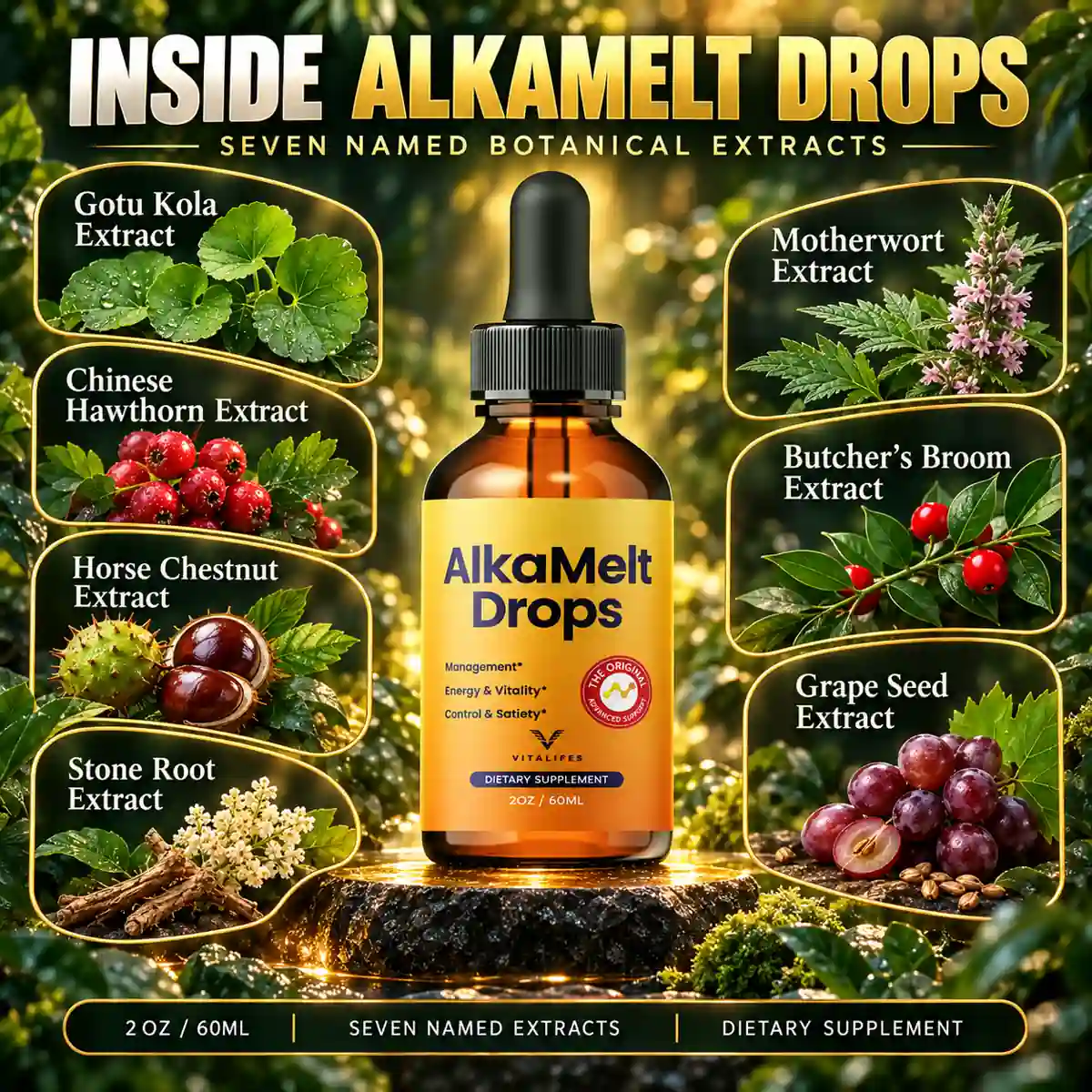
- This pack sheet names Chinese hawthorn (Crataegus pinnatifida), fruit.
- The Cochrane review of hawthorn for heart failure, and the largest randomised trial ever run on the plant, both restricted themselves to leaf-and-flower monopreparations of European hawthorn (Crataegus monogyna and C. laevigata).
- The largest trial, SPICE, ran 2,681 patients on 900 mg a day of WS 1442 for 24 months.
- Leaf-and-flower extracts are standardised to oligomeric procyanidins. Fruit is a different tissue with a different chemical profile, and it was not the tissue in these trials.
- None of this means Chinese hawthorn fruit does nothing. It means the specific evidence this website can point to for “hawthorn” was not built on it.
What this pack sheet actually names
The retail pack sheet for this product lists “Chinese Hawthorn Extract (fruit)” as the second of its seven named botanicals. Chinese hawthorn is the common name for Crataegus pinnatifida, a species native to northern China and used for centuries in traditional Chinese medicine as shan zha — typically the dried fruit, eaten or brewed, associated with digestion and with fatty-meal tolerance rather than with the cardiovascular claims most Western readers associate with the word “hawthorn.”
That is worth sitting with for a moment, because “hawthorn” as a supplement-aisle word carries a specific reputation: a cardiovascular botanical with one of the larger clinical trial literatures in all of herbal medicine. This section exists to separate that reputation from the particular species and plant part sitting in this dropper, because the two are not automatically the same thing.
Where the Cochrane review draws its line
The most authoritative single summary of hawthorn’s clinical evidence is the Cochrane review of hawthorn extract for chronic heart failure. Its own inclusion criteria state the boundary plainly: trials had to be “randomised, double-blind, and placebo controlled, and use hawthorn leaf and flower extract monopreparations.” The German Commission E monograph that the review cites as the regulatory basis for hawthorn’s use in heart failure likewise approved “extracts of hawthorn leaf with flower,” not fruit.
Fourteen trials met that criteria across the review’s search. Ten of them, covering 855 patients with New York Heart Association class I–III heart failure, were suitable for pooling. Hawthorn extract outperformed placebo on maximal workload (a weighted mean difference of 5.35 Watts), on exercise tolerance (122.76 Watt-minutes), and on the pressure-heart-rate product, a marker of cardiac oxygen demand. Every one of those trials was built on the leaf-and-flower preparation the inclusion criteria required.
| What the Cochrane review required | What it found |
|---|---|
| Randomised, double-blind, placebo-controlled trials of hawthorn leaf-and-flower monopreparations | 14 trials met criteria; 10 trials / 855 patients pooled |
| Maximal workload | WMD +5.35 Watts vs placebo (P<0.02) |
| Exercise tolerance | WMD +122.76 Watt-minutes vs placebo |
| Pressure-heart-rate product (cardiac oxygen demand) | WMD −19.22 mmHg/min vs placebo |
Every row in this table is evidence for the leaf-and-flower preparation. None of it was collected on fruit.
A review that specifies the plant part in its own selection criteria is doing a reader a favour: it is telling you, explicitly, what “hawthorn” meant to the researchers who ran these studies. It did not mean the fruit.
SPICE: the largest trial hawthorn has ever had
The single largest randomised trial in hawthorn’s history is the SPICE trial — Survival and Prognosis: Investigation of Crataegus Extract WS 1442 in CHF — published in the European Journal of Heart Failure in 2008. It is worth describing in full because its scale is unusual for a botanical and because its result is more honest than most marketing built on hawthorn’s name.
2,681 patients with NYHA class II or III chronic heart failure and a reduced ejection fraction were randomised to 900 mg a day of WS 1442 — a standardised extract of Crataegus monogyna and C. laevigata leaf and flower — or to placebo, on top of their existing medication, for 24 months. The primary endpoint was time to first cardiac event.
The result: no significant difference on the primary endpoint. Average time to a first cardiac event was 620 days on WS 1442 versus 606 days on placebo (hazard ratio 0.95, P=0.476). Cardiac mortality trended lower with WS 1442 but did not reach significance. In the pre-specified subgroup with less-impaired ejection fraction (≥25%), WS 1442 reduced sudden cardiac death by 39.7% (HR 0.59, P=0.025) — a real, statistically significant finding, but a subgroup one, not the trial’s primary claim.
| SPICE trial | Detail |
|---|---|
| Preparation | WS 1442, Crataegus monogyna / C. laevigata leaf-and-flower extract |
| Dose | 900 mg/day, 24 months |
| Patients | 2,681 randomised (1,338 WS 1442; 1,343 placebo), NYHA class II–III |
| Primary endpoint | Time to first cardiac event — not significant (HR 0.95, P=0.476) |
| Subgroup finding | 39.7% reduction in sudden cardiac death, LVEF ≥25% subgroup (HR 0.59, P=0.025) |
A trial this size failing its primary endpoint is a more useful fact than a smaller trial succeeding on one. It is also, again, a trial of leaf-and-flower extract.
This is exactly the kind of finding this desk tries to print rather than skip past. A 2,681-patient trial that did not confirm its headline hypothesis is real evidence, and printing only the subgroup result would misrepresent what SPICE actually showed. It is also, for the purposes of this page, a second confirmation that the largest hawthorn trial on record used the leaf-and-flower species and part, at 900 mg a day — not the fruit named on this bottle’s pack sheet.
Read the Alka Melt Drops research beside every name
Seven botanicals on the retail pack sheet, four more on the seller’s artwork, and the dose or species gap each one’s trials carry printed next to it. A 2 fl oz / 60 mL amber glass dropper bottle, with the pack price at the seller’s checkout.
Price at checkout · one-time payment · money-back guarantee as printed on the listing
Order Alka Melt Drops On The Official Website2 fl oz / 60 mL amber glass dropper bottle · lot ALK-26/TH-2256
A dose-ranging trial that found no dose response
Not every hawthorn trial reports a clean win, and a rigorous label reader should see the messier ones too. A 2012 crossover trial from the University of North Carolina tested whether hawthorn extract’s proposed blood-pressure benefit tracks with dose. Twenty-one prehypertensive or mildly hypertensive adults received placebo or hawthorn extract — again standardised to 50 mg of oligomeric procyanidins per 250 mg of extract, the leaf-and-flower marker — at 1,000 mg, 1,500 mg or 2,500 mg, each dose held for three and a half days with a four-day washout between periods.
The outcome measured was flow-mediated dilation, an indirect read on nitric-oxide-driven vasodilation in the brachial artery. The finding: no evidence of a dose-response relationship on flow-mediated dilation or on blood pressure itself. The authors concluded that if hawthorn lowers blood pressure, the mechanism is probably not the nitric-oxide pathway they were testing.
This trial matters here for a narrow reason: it is a second, independent confirmation that when researchers dose-range hawthorn to look for a mechanism, the material under test is the oligomeric-procyanidin-standardised leaf-and-flower extract — the same chemical marker the Cochrane review and SPICE both used. The procyanidin standardisation is specific enough that it functions almost as a species-and-part fingerprint across this literature.
Why the part and the species are not a technicality
Leaf, flower and fruit are different tissues on the same plant, and different tissues make different chemistry. A review of hawthorn’s phytochemistry and pharmacology in Current Medicinal Chemistry describes the oligomeric procyanidins — the compound class every trial above standardised to — as concentrated in the leaf and flower, alongside flavonoids such as vitexin and hyperoside. Fruit carries its own flavonoid and organic-acid profile, and the two tissues are not chemically interchangeable simply because they come from the same genus.
This is not a claim that fruit contains nothing of interest. Chinese hawthorn fruit is rich in flavonoids and organic acids in its own right, and it has its own, separate pharmacology literature, much of it in vitro or in animal models rather than in randomised human trials. The point is narrower and more useful: the specific clinical trial base cited above — the Cochrane pooled result, SPICE, the dose-ranging FMD trial — was built on leaf-and-flower monopreparations standardised to procyanidins. Citing that evidence for a fruit extract borrows a result the fruit was not tested to produce.
What exists for Chinese hawthorn fruit specifically
A search of the published literature for Crataegus pinnatifida turns up real research — but a different kind. Much of it concerns fruit extracts and formulas used in traditional Chinese medicine for lipid metabolism, non-alcoholic fatty liver disease and digestive complaints, tested largely in cell culture and animal models, with some human work embedded inside multi-herb formulas rather than as a Chinese-hawthorn-alone randomised trial. A 2021 randomised trial in the Journal of Ethnopharmacology, for instance, tested a multi-herb “detoxifying and blood-activating” formula for unstable angina — a real human RCT, but one testing a combination product, not an isolated fruit extract against placebo.
That is a genuinely different evidence picture from the one built around WS 1442 and the Cochrane leaf-and-flower pool. It is not evidence of nothing. It is evidence of a different kind, at an earlier stage, mostly outside the randomised, placebo-controlled human-trial design that this desk treats as the strongest tier. Anyone reading “Chinese Hawthorn Extract (fruit)” and mentally substituting the SPICE trial’s 900 mg WS 1442 result is substituting evidence for a different material.
Reading a hawthorn row on any label
Four questions, and they take under a minute.
- Which species? Crataegus monogyna, C. laevigata (European hawthorn) or C. pinnatifida (Chinese hawthorn) are not interchangeable for citation purposes, whatever their shared genus.
- Which part? Leaf-and-flower is the tissue behind the Cochrane review, SPICE and the dose-ranging FMD trial. Fruit is a different literature.
- Is a standardisation marker given? Look for oligomeric procyanidins with a percentage or milligram figure. Without it, a leaf-and-flower row still cannot be matched to a specific trial dose.
- Does the milligram figure land anywhere near 900 mg a day? That is the dose the largest and longest trial on record actually used.
A label answering all four, on the correct species and part, is rare and worth paying attention to. A label naming only “hawthorn” with no species has left the most important of the four questions open.
This desk uses a near-identical checklist — part, weight, standardisation marker, total daily amount — on horse chestnut. The species question is what makes hawthorn’s version one step longer.
What that means for this bottle
This pack sheet is more specific than most: it names both a species (Chinese) and a part (fruit) for its hawthorn entry. That specificity is worth crediting. What it does not do is give a milligram amount or a standardisation marker for that fruit extract, so none of the dose comparisons in the tables above can be run against it.
More importantly, naming Chinese hawthorn fruit tells a careful reader in advance that the cardiovascular trial base built on European leaf-and-flower — the Cochrane pool, SPICE, the FMD dose-ranging study — is not the evidence this ingredient is standing on, whatever a marketing page elsewhere might imply by using the word “hawthorn” unqualified. This site’s ingredients page prints the leaf-and-flower research in full precisely so that gap is visible rather than papered over.
References
- Pittler MH, Guo R, Ernst E. Hawthorn extract for treating chronic heart failure. Cochrane Database Syst Rev. 2008;2008(1):CD005312. PMID 18254076. https://pubmed.ncbi.nlm.nih.gov/18254076/
- Holubarsch CJ, Colucci WS, Meinertz T, Gaus W, Tendera M; SPICE trial study group. The efficacy and safety of Crataegus extract WS 1442 in patients with heart failure: the SPICE trial. Eur J Heart Fail. 2008;10(12):1255-63. PMID 19019730. https://pubmed.ncbi.nlm.nih.gov/19019730/
- Asher GN, Viera AJ, Weaver MA, Dominik R, Caughey M, Hinderliter AL. Effect of hawthorn standardized extract on flow mediated dilation in prehypertensive and mildly hypertensive adults: a randomized, controlled cross-over trial. BMC Complement Altern Med. 2012;12:26. PMID 22458601. https://pubmed.ncbi.nlm.nih.gov/22458601/
- Orhan IE. Phytochemical and Pharmacological Activity Profile of Crataegus oxyacantha L. (Hawthorn) - A Cardiotonic Herb. Curr Med Chem. 2018;25(37):4854-4865. PMID 27655074. https://pubmed.ncbi.nlm.nih.gov/27655074/
- Wu M, Yang S, Liu G, Gu C, et al. Treating unstable angina with detoxifying and blood-activating formulae: A randomized controlled trial. J Ethnopharmacol. 2021;281:114533. PMID 34416295. https://pubmed.ncbi.nlm.nih.gov/34416295/
- Dahmer S, Scott E. Health effects of hawthorn. Am Fam Physician. 2010;81(4):465-8. PMID 20148500. https://pubmed.ncbi.nlm.nih.gov/20148500/