Alka Melt Drops Official Website › Blog › What Phlebotonic Evidence Measured
What Phlebotonic Evidence Actually Measured
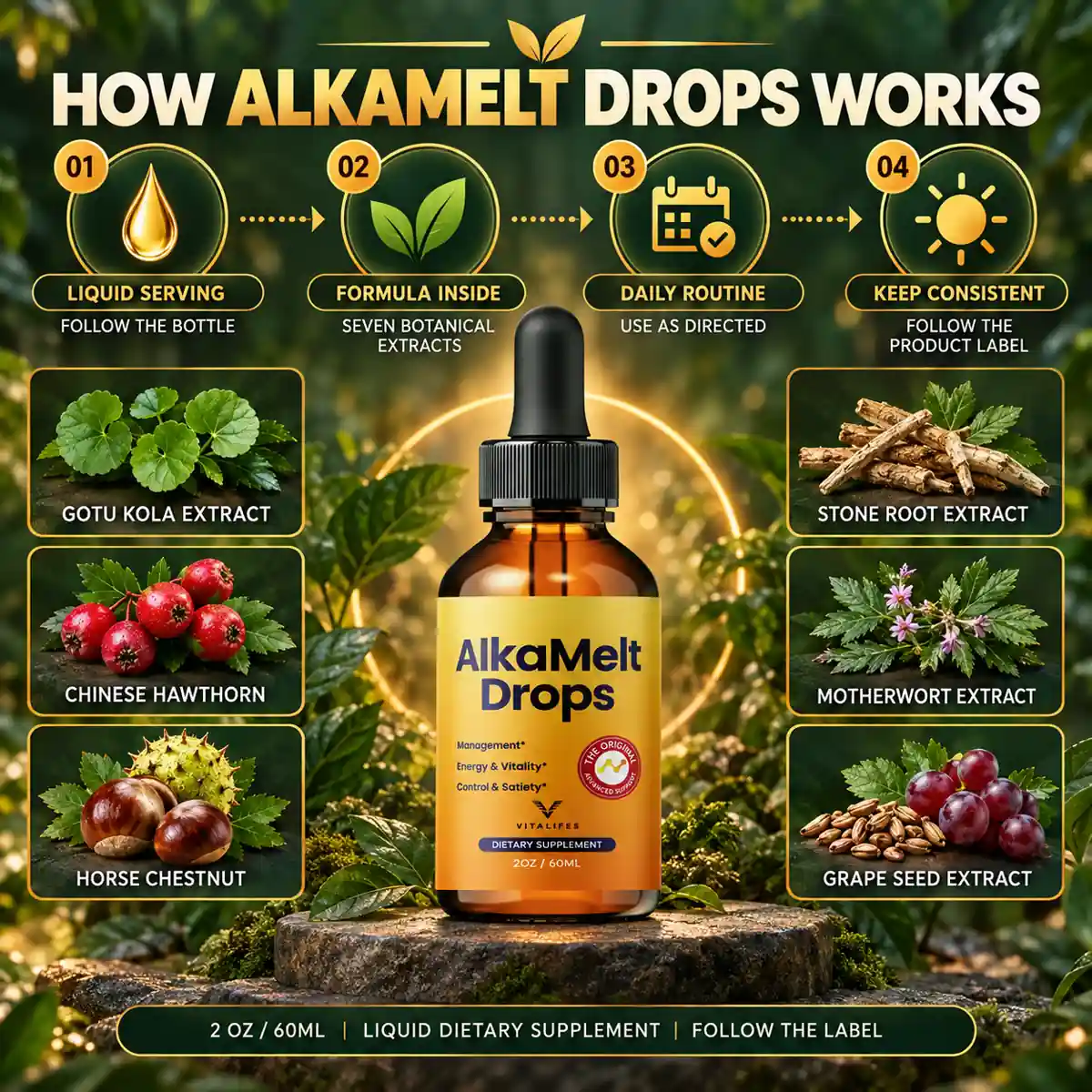
Gotu kola, horse chestnut, butcher’s broom and grape seed turn up together often enough to have a name: the phlebotonic quartet. Their evidence is real and it is some of the better evidence in botanical medicine. Reading what it measured is what separates a citation from an argument.
- All four plants have controlled human trials behind them, which is unusual in this category.
- The condition studied was chronic venous insufficiency: valves in the leg veins failing to close, with fluid moving into the tissue.
- The instruments were leg measurements, ankle circumference and patient-reported symptom scores.
- Grape seed is the exception, and its trials measured blood pressure and endothelial function.
- None of the five instruments points at appetite, energy or body composition.
The condition the trials were run in
Chronic venous insufficiency is a circulatory condition of the legs. The one-way valves inside the leg veins stop closing properly, blood pools rather than returning cleanly upward, pressure rises in the capillaries and fluid moves out into the surrounding tissue.
The result is swelling, aching, heaviness and itching, usually worse at the end of a day spent standing. It is common, it is measurable, and it has been studied for decades because it responds to things that can be tested.
The Cochrane phlebotonics review is the umbrella document for the whole class of preparations used in it. Phlebotonic is simply the word for a preparation intended to act on venous tone, and the four plants below are the ones a reader is most likely to meet.
What each plant’s key record used and found
Setting the four out together makes the pattern visible in a way that reading them one at a time does not.
| Plant | The key record | Dose in the trial | What was measured |
|---|---|---|---|
| Gotu kola | A 1994 double-blind microcirculation study | 60–120 mg/day titrated extract | Microcirculation in the lower leg |
| Horse chestnut | The Cochrane review | 600 mg/day, 100 mg aescin | Leg pain, oedema, itching |
| Butcher’s broom | The placebo-controlled trial | 150 mg Ruscus with 150 mg hesperidin and 100 mg vitamin C | Venous symptoms and leg volume |
| Grape seed | A meta-analysis of 16 randomised trials | Pooled, with dose-response analysed | Blood pressure and endothelial function |
Four plants, four literatures, and not one of them measuring appetite or energy.
Three of the four sit squarely in the venous literature. The gotu kola microcirculation study is a double-blind trial measuring circulation in the lower leg; the horse chestnut review pools trials in the same condition; the butcher’s broom trial tested a preparation against placebo in patients with it.
Grape seed is the outlier and it is worth being precise about. A meta-analysis of 16 randomised trials reported blood pressure outcomes, with a dose-response analysis. That is cardiovascular research rather than venous research, and it is a different literature again.
Gotu kola, and a literature pointing two ways
One of the four is a genuinely interesting case, and a reader who stops at the venous column will miss it.
Centella asiatica has the venous record described above, at a dose of sixty to a hundred and twenty milligrams a day of a titrated extract, which is a small figure beside the six hundred milligrams horse chestnut runs at. But it also has a separate literature entirely. A 2017 meta-analysis pooled studies of cognitive function and mood-related outcomes, which is a different population, a different instrument set and a different question.
That matters for how a citation should be read in both directions. A label quoting the venous work to support an energy claim has borrowed the wrong literature; a label quoting the cognitive work to support a circulation claim has done the same thing in reverse. The plant has two bodies of evidence and neither of them substitutes for the other.
It also demonstrates why this article insists on the outcome column rather than on a verdict per plant. Gotu kola is not a strong ingredient or a weak one. It is an ingredient with two specific research questions attached to it, and the useful thing a reader can do is find out which one a given citation belongs to before deciding what it supports.
Why the dose gap is worth noticing too
Sixty to a hundred and twenty milligrams against six hundred is a tenfold difference between two plants sitting in the same group on the same pack sheet. It is a reminder that a list of names is not a formulation: the amounts these four were studied at are nowhere near each other, and a product naming all four tells a reader nothing about how it has balanced them.
The instruments, one at a time
A citation is only as strong as what the study actually measured, and the measurement is usually in the methods rather than the abstract. Here are the five that recur.
| What the trials recorded | How it was measured | What it is not |
|---|---|---|
| Leg volume | Water displacement or calf measurement | A measure of body composition |
| Oedema | Ankle circumference and clinical scoring | A measure of appetite |
| Symptom scores | Patient-reported pain, heaviness and itching | A measure of energy |
| Capillary filtration | Instrumented measurement in the lower leg | A metabolic rate |
| Blood pressure | Standard cuff measurement in the grape seed trials | An outcome the label claims |
Five instruments. Every one of them points at a leg or an artery.
Read that table’s middle column and the position is plain. These are studies in which somebody measured a leg, or attached a cuff to an arm, and recorded a number before and after. They are good studies of the things they measured.
Any citation can be checked this way and it takes under two minutes. Open the record, find what was measured, and ask whether it is the thing the product is being sold for. Most disagreements about supplement evidence dissolve at that step.
Every Alka Melt Drops citation names what it measured
Forty-five records on this website, each one linked, each one with its dose and its outcome stated. A 2 fl oz / 60 mL amber glass dropper bottle, and the pack price shown at the seller’s checkout.
Price at checkout · one-time payment · money-back guarantee as printed on the listing
Order Alka Melt Drops On The Official Website2 fl oz / 60 mL amber glass dropper bottle · lot ALK-26/TH-2256
The butcher’s broom complication
One of the four needs a caveat that is easy to miss and changes how the citation should be read.
The placebo-controlled trial and the meta-analysis of the same preparation did not test butcher’s broom on its own. The product studied contained 150 mg of Ruscus aculeatus extract together with 150 mg of hesperidin methyl chalcone and 100 mg of ascorbic acid, in one capsule.
So the result belongs to a three-part combination. Hesperidin is itself a flavonoid with venous research behind it, and vitamin C is not inert in this context either. A label naming butcher’s broom alone and citing those trials has borrowed a result from a product it does not match.
This is not a rare problem. A good proportion of botanical evidence comes from multi-ingredient preparations, and the citation usually survives into marketing copy without the other two ingredients attached.
Why the outcome column decides everything
Four plants with real trials is a genuinely strong position for a supplement label, and it is the reason this quartet is worth respecting rather than dismissing.
But a citation does two jobs and only one of them is decorative. It establishes that somebody has tested the ingredient, and it establishes what they tested it for. A label that quotes the first and omits the second has used the research as a credential rather than as evidence.
On this product the four are printed on a wrap whose three starred lines describe energy, vitality and satiety. None of the five instruments in the table above measures any of those. That gap is stated once on the mechanism page and it is the honest reading of the pack sheet.
What does and does not follow
Three conclusions follow from the above and two popular ones do not.
- It follows that these four plants have been studied in humans in controlled trials, which most names in this category have not.
- It follows that their results are about legs and arteries, and that a reader should not expect those results to transfer.
- It follows that a butcher’s broom citation carries two other ingredients with it unless the label says otherwise.
- It does not follow that the plants do nothing else. Absence of a trial is not a finding, and several have mechanistic work pointing elsewhere.
- It does not follow that the formulation is a poor one. It follows that the evidence offered for it is evidence for something else.
Three starred lines from the front wrap and nothing beyond them. The seller’s marketing artwork asserts seven further things, including a ratio defined nowhere it publishes, and those are named and refused on the disclaimer page rather than repeated anywhere here.
Checking any citation in ninety seconds
The whole of this article is one habit, and it is worth stating as a procedure because it works on any product in any category.
- Open the record rather than the page citing it. A link that goes to a summary of a summary is not a citation.
- Find the population. Who was studied, and did they have a condition?
- Find the dose. It is almost always in the abstract, and it is the number to carry back to the label.
- Find the outcome. What instrument produced the result, and what does that instrument measure?
- Check whether the product was single-ingredient. If not, the result belongs to the combination.
Five questions, one record, ninety seconds. Run it on the citations behind any three supplement labels and the category stops being mysterious, which is a more useful outcome than a verdict on any single bottle.
References
- Martinez-Zapata MJ, Vernooij RW, Simancas-Racines D, et al. Phlebotonics for venous insufficiency. Cochrane Database Syst Rev. 2020;11(11):CD003229. PMID 33141449. https://pubmed.ncbi.nlm.nih.gov/33141449/
- Cesarone MR, Laurora G, De Sanctis MT, et al. [The microcirculatory activity of Centella asiatica in venous insufficiency. A double-blind study]. Minerva Cardioangiol. 1994;42(6):299-304. PMID 7936334. https://pubmed.ncbi.nlm.nih.gov/7936334/
- Puttarak P, Dilokthornsakul P, Saokaew S, et al. Effects of Centella asiatica (L.) Urb. on cognitive function and mood related outcomes: A Systematic Review and Meta-analysis. Sci Rep. 2017;7(1):10646. PMID 28878245. https://pubmed.ncbi.nlm.nih.gov/28878245/
- Vanscheidt W, Jost V, Wolna P, et al. Efficacy and safety of a Butcher's broom preparation (Ruscus aculeatus L. extract) compared to placebo in patients suffering from chronic venous insufficiency. Arzneimittelforschung. 2002;52(4):243-50. PMID 12040966. https://pubmed.ncbi.nlm.nih.gov/12040966/
- Boyle P, Diehm C, Robertson C. Meta-analysis of clinical trials of Cyclo 3 Fort in the treatment of chronic venous insufficiency. Int Angiol. 2003;22(3):250-62. PMID 14612852. https://pubmed.ncbi.nlm.nih.gov/14612852/
- Zhang H, Liu S, Li L, et al. The impact of grape seed extract treatment on blood pressure changes: A meta-analysis of 16 randomized controlled trials. Medicine (Baltimore). 2016;95(33):e4247. PMID 27537554. https://pubmed.ncbi.nlm.nih.gov/27537554/
- Pittler MH, Ernst E. Horse chestnut seed extract for chronic venous insufficiency. Cochrane Database Syst Rev. 2012;11(11):CD003230. PMID 23152216. https://pubmed.ncbi.nlm.nih.gov/23152216/