Alka Melt Drops Official Website › Blog › Apple Cider Vinegar: The Artwork's Ingredient
Apple Cider Vinegar: The Artwork's Ingredient, Read Against Its Own Trials
Apple cider vinegar is not on the retail pack sheet this website works from. It is, however, the one ingredient three of the four published lists for this bottle agree on — named on the seller’s own artwork and on two independent third-party retail sites. Given how often it turns up, its own dosing literature deserves a page of its own.

- The retail pack sheet this desk works from does not name apple cider vinegar. The seller’s own artwork, and two of the three other published lists, do.
- A 2025 meta-analysis pooled randomised trials of apple cider vinegar and body composition in people with type 2 diabetes or overweight.
- Two earlier trials by the same research group established the roughly 20-30 mL/day dosing range most vinegar research since has used, taken with a meal.
- Vinegar’s acidity is a real dental and oesophageal consideration, documented directly in laboratory erosion testing, not a theoretical concern.
- None of this changes what the retail pack sheet for this specific bottle names. It changes what a reader should know if their bottle’s front wrap matches the seller’s artwork instead.
Where apple cider vinegar actually appears
This website works from the distributor’s retail pack sheet, which names seven botanical extracts: gotu kola, Chinese hawthorn, horse chestnut, stone root, motherwort, butcher’s broom and grape seed. Apple cider vinegar is not one of the seven. It is, however, named on the seller’s own “What’s Inside” artwork, alongside raspberry ketones, wild yam extract and bitter melon extract — a photograph that ships in the same asset pack as the bottle images used elsewhere on this website. It is also named on two of the three other published lists this desk has found for this bottle, from two unaffiliated retail sites.
The full account of all four lists is set out on this site’s ingredients page, with the reasoning for why the retail sheet is the one this desk defaults to. This page exists for a narrower reason: apple cider vinegar is named more often across the published record for this product than any other single ingredient, and its own clinical literature is large enough to deserve its own page rather than a paragraph.
The 2025 meta-analysis on body composition
A systematic review and meta-analysis published in Nutrients in September 2025 pooled randomised controlled trials examining apple cider vinegar intake and body composition specifically in people with type 2 diabetes or overweight. This is the most directly relevant paper to the "weight-management positioning" this product carries in its marketing, because it is one of the few pieces of vinegar research aimed squarely at body composition outcomes rather than blood glucose alone.
The review's population is worth being precise about: trials in people with type 2 diabetes and/or overweight, not a general healthy population, and not specifically people using a liquid dropper product. A pooled result drawn from that population describes what happened in that population, under the dosing and duration the included trials used — a detail worth carrying into the next section, because the dose behind this literature is smaller than many marketing pages imply.
The two trials that set the 20-30 mL dose
Much of the modern vinegar-and-glycaemia literature traces back to a pair of trials from the same research group at Arizona State University. The earlier of the two, published in the Journal of the American Dietetic Association in 2005, tested vinegar alongside peanut products as complementary foods to reduce the post-meal blood sugar rise (postprandial glycemia) that follows a carbohydrate-containing meal. A follow-up trial, published in Annals of Nutrition & Metabolism in 2010, examined the antiglycemic properties of vinegar more directly in healthy adults.
| Trial | Population | Dose and timing | Outcome |
|---|---|---|---|
| Johnston & Buller, 2005 | Adults, complementary-food design | Vinegar taken with a carbohydrate meal | Reduced postprandial glycemia |
| Johnston et al., 2010 | Healthy adults | ~20 mL vinegar (about 4 teaspoons), typically diluted in water, with a meal | Antiglycemic effect confirmed |
| Castagna et al., 2025 (meta-analysis) | Adults with type 2 diabetes and/or overweight, pooled trials | Pooled across included trials, generally in the 15-30 mL/day range | Body composition outcomes |
This is a mealtime dose, taken with food, not a standalone dropper serving between meals.
That dosing detail matters more than it might first appear. The trials behind vinegar's antiglycemic reputation used roughly 15 to 30 millilitres a day, generally diluted and taken with or shortly before a meal containing carbohydrate, not sipped on an empty stomach or taken from a dropper in isolation. A liquid supplement marketed as delivering vinegar's benefits in a small daily dropper serving, disconnected from a meal, is not replicating the conditions these trials actually tested.

Read the Alka Melt Drops research beside every name
Seven botanicals on the retail pack sheet, four more on the seller’s artwork, and the dose or species gap each one’s trials carry printed next to it. A 2 fl oz / 60 mL amber glass dropper bottle, with the pack price at the seller’s checkout.
Price at checkout · one-time payment · money-back guarantee as printed on the listing
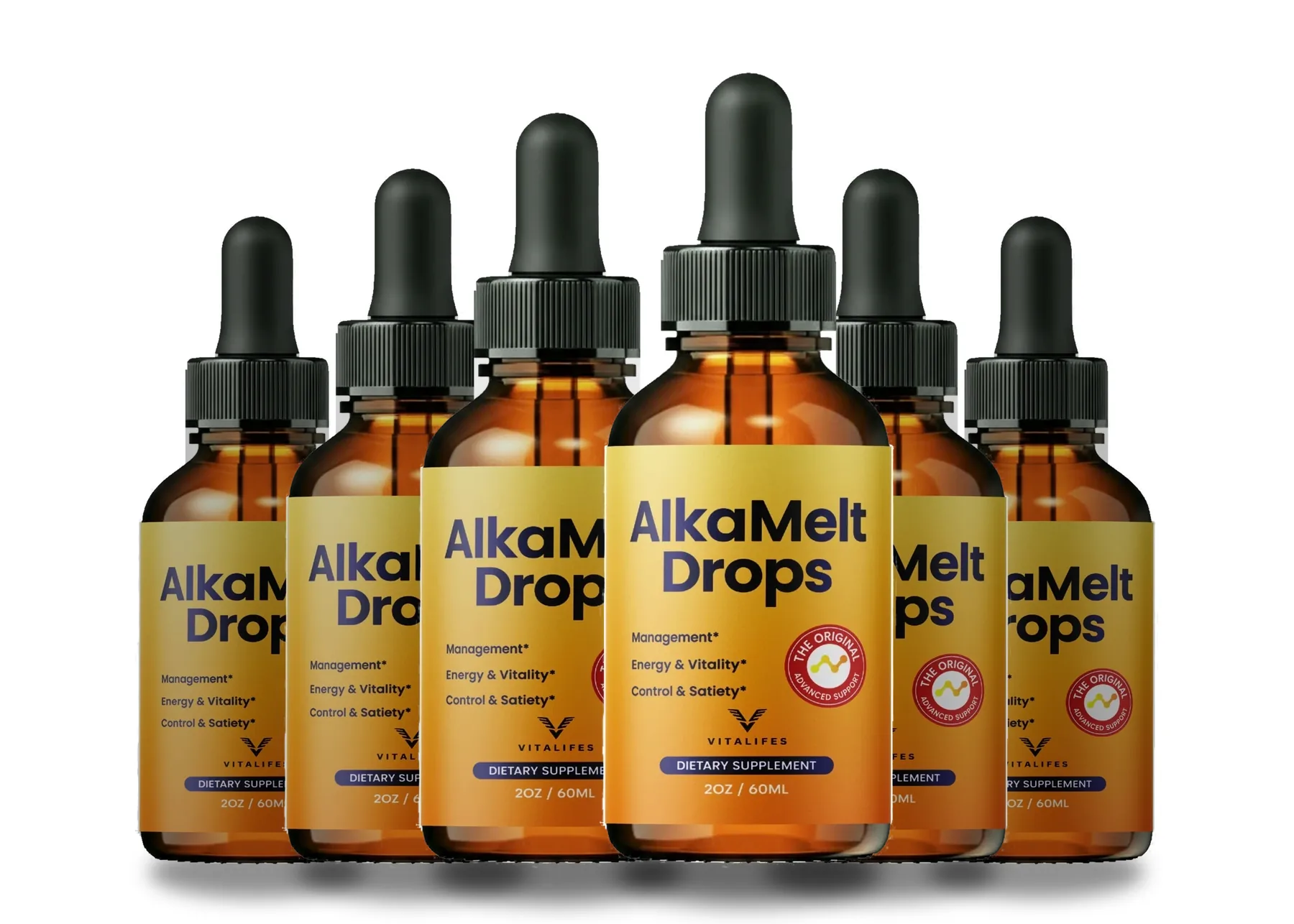
Order Alka Melt Drops On The Official Website2 fl oz / 60 mL amber glass dropper bottle · lot ALK-26/TH-2256
What the mechanism research proposes
The leading proposed mechanism behind vinegar's antiglycemic effect is acetic acid's action on digestive enzymes and gastric emptying: acetic acid appears to inhibit disaccharidase enzymes that break carbohydrates into absorbable sugars, and may also slow the rate at which the stomach empties into the small intestine, both of which would blunt how quickly a meal's carbohydrate content reaches the bloodstream. This is a plausible, mechanistically grounded explanation, and it is consistent with vinegar working best when taken with, not separately from, a carbohydrate-containing meal.
It is worth being precise about what this mechanism does and does not support. Slowing carbohydrate absorption at a meal is a different claim from increasing metabolic rate, suppressing appetite, or directly burning fat — claims that appear on many vinegar marketing pages but are not what the Johnston trials or the 2025 meta-analysis actually tested.
There is a secondary, more indirect route by which a meal-time vinegar habit could plausibly relate to body composition over time, and it is worth stating carefully because it is easy to overstate. If blunting a post-meal blood sugar spike also blunts the insulin response that follows it, and if that pattern repeats at most meals over months, some researchers have proposed a modest downstream effect on hunger signalling and subsequent eating. This is a mechanistic hypothesis rather than a demonstrated outcome in the trials cited on this page, none of which tracked eating behaviour or long-term weight change as a primary endpoint. The 2025 meta-analysis is the closest any of this literature comes to testing body composition directly, and its population, again, was specifically people with type 2 diabetes or overweight rather than a general audience.
The dental and oesophageal caution
Vinegar's acidity is not a marketing footnote; it is a laboratory-documented property with real consequences for tooth enamel and, less commonly reported, for the oesophagus in concentrated or frequent use. A 2014 in vitro study in Clinical Laboratory used an electron microprobe to directly measure dental erosion caused by different vinegar varieties, confirming what dentists have long cautioned about undiluted vinegar exposure to enamel.
The practical takeaway from this literature, consistent across essentially every vinegar-safety source, is dilution and timing: vinegar taken undiluted, sipped slowly, or held in the mouth increases both dental and oesophageal exposure time. Every trial in the dosing section above diluted its vinegar dose in water before it was consumed. A liquid dropper product delivering vinegar directly and undiluted is a materially different exposure pattern than the trials this section is built on.
Anyone with acid reflux, a history of dental erosion, or an oesophageal condition should raise any vinegar-containing supplement with a dentist or physician before daily use, and should never hold an acidic liquid supplement in the mouth before swallowing.
A liquid dropper delivery format raises this caution in a way a diluted glass of water does not. Vinegar sipped from a glass, mixed with several ounces of water, passes over the teeth briefly and in a diluted state. A concentrated dropper serving, taken directly, delivers a smaller volume at a higher relative acid concentration, and depending on how it is administered, may have more direct and prolonged contact with tooth surfaces before it is swallowed or further diluted. None of the trials on this page tested a dropper delivery format specifically, so this is a reasoned inference from the underlying chemistry rather than a direct finding, and it is exactly the kind of gap a reader should ask a manufacturer about directly rather than assume away.
Reading a vinegar row on any label
Three questions.
- Is the dose anywhere near 15-30 mL/day? That is the range behind the antiglycemic trials. A dropper serving well under that figure is not replicating the trial dose.
- Is it taken with a meal? The mechanism this literature proposes depends on vinegar being present alongside carbohydrate in the digestive tract, not on a standalone daily serving.
- Is it diluted? Every cited trial diluted its dose. Undiluted vinegar, held in the mouth or swallowed neat, carries the dental and oesophageal exposure this page describes.
What that means for this bottle
The retail pack sheet this desk defaults to for this specific product does not name apple cider vinegar among its seven botanicals. Anyone whose bottle carries the seller's alternate "What's Inside" artwork instead, or who has read one of the two third-party retail sites naming it, is looking at a genuinely different ingredient list, and the dosing and safety information on this page applies to that list, not to the retail sheet's seven.
What this desk can say honestly either way: if apple cider vinegar is present in this bottle at all, its own literature points to a 15-30 mL/day mealtime dose, diluted, as the amount behind its antiglycemic research — a volume this 60 mL bottle, used as a once-daily dropper serving over a month, could not plausibly deliver in full. The full four-list comparison sets out exactly which document says what.
References
- Castagna A, Ferro Y, Noto FR, et al. Effect of Apple Cider Vinegar Intake on Body Composition in Humans with Type 2 Diabetes and/or Overweight: A Systematic Review and Meta-Analysis of Randomized Controlled Trials. Nutrients. 2025;17(18):3007. PMID 41010525. https://pubmed.ncbi.nlm.nih.gov/41010525/
- Johnston CS, Steplewska I, Long CA, Harris LN, Ryals RH. Examination of the antiglycemic properties of vinegar in healthy adults. Ann Nutr Metab. 2010;56(1):74-9. PMID 20068289. https://pubmed.ncbi.nlm.nih.gov/20068289/
- Johnston CS, Buller AJ. Vinegar and peanut products as complementary foods to reduce postprandial glycemia. J Am Diet Assoc. 2005;105(12):1939-42. PMID 16321601. https://pubmed.ncbi.nlm.nih.gov/16321601/
- Willershausen I, Weyer V, Schulte D, et al. In vitro study on dental erosion caused by different vinegar varieties using an electron microprobe. Clin Lab. 2014;60(5):783-90. PMID 24839821. https://pubmed.ncbi.nlm.nih.gov/24839821/