Alka Melt Drops Official Website › Blog › Alka Melt Drops Dosage
Alka Melt Drops Dosage: How Many Drops a Day? 5 Steps
Quick answer. There is no published answer to how many Alka Melt Drops to take a day. The front label declares neither a serving size nor a drop count, so this site prints none. Five steps below show where the answer lives: the bottle, the order desk, your doctor, and trial doses used only for comparison.
Whichever pack you pick, the directions on the bottle set the amount. The price and the guarantee are both on the checkout page.
See today’s price and guaranteeYou will find the price only at checkout, because none is printed here. This site is the retailer, and it earns from orders made through its checkout.
- Serving size and drop count: not declared on the front label. This site prints neither.
- Read the directions on the arriving bottle as an upper limit, not a place to start.
- The doses on this site belong to research trials, not to this bottle.
- Net contents: 2 fl oz / 60 mL. Packs come as 1, 3 or 6 bottles.
- How long a bottle lasts is set by the directions on the physical label.
- Meant for healthy adults aged 18 and over. Tell your doctor about any medicine you take.
How many Alka Melt Drops should you take a day?
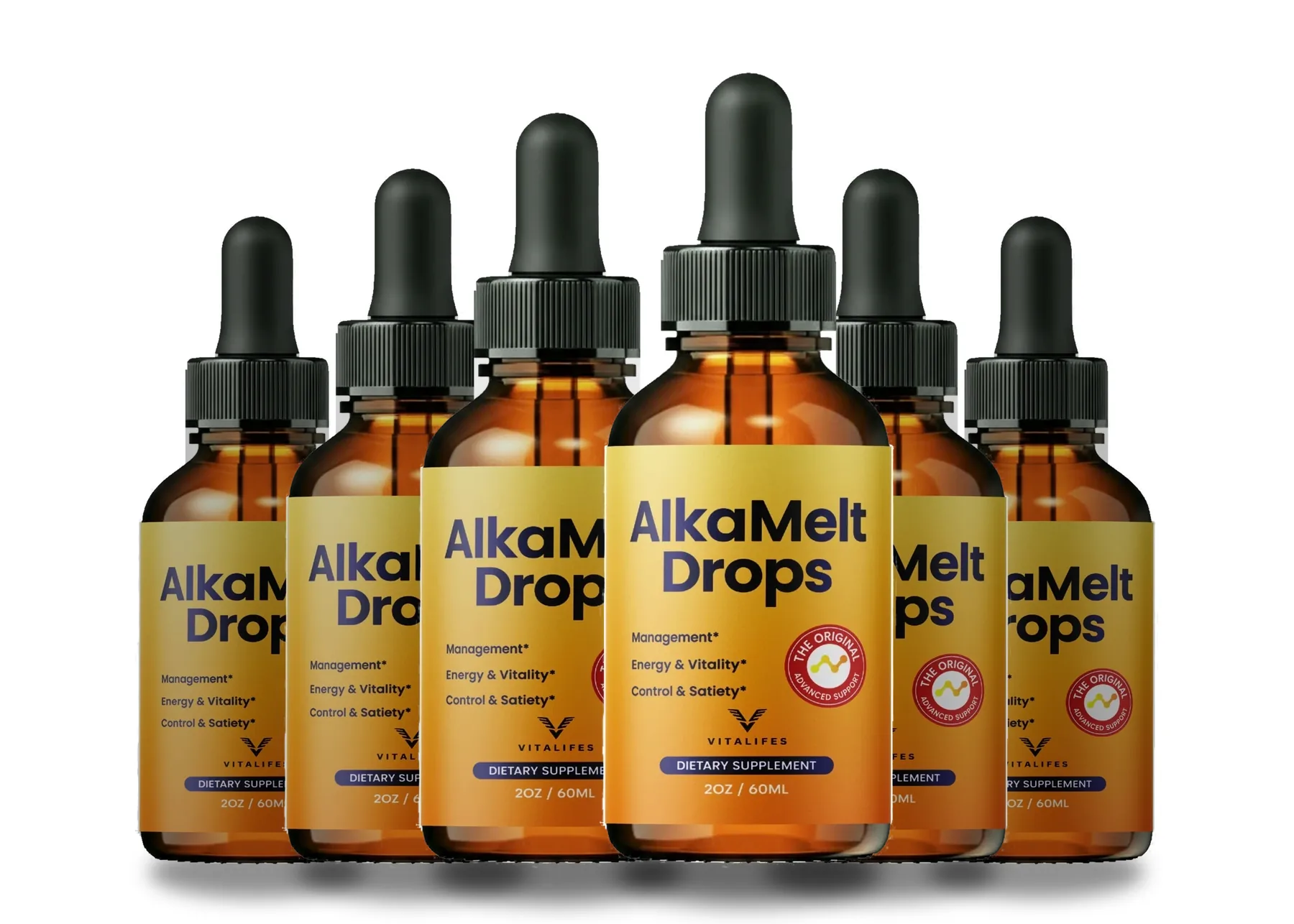
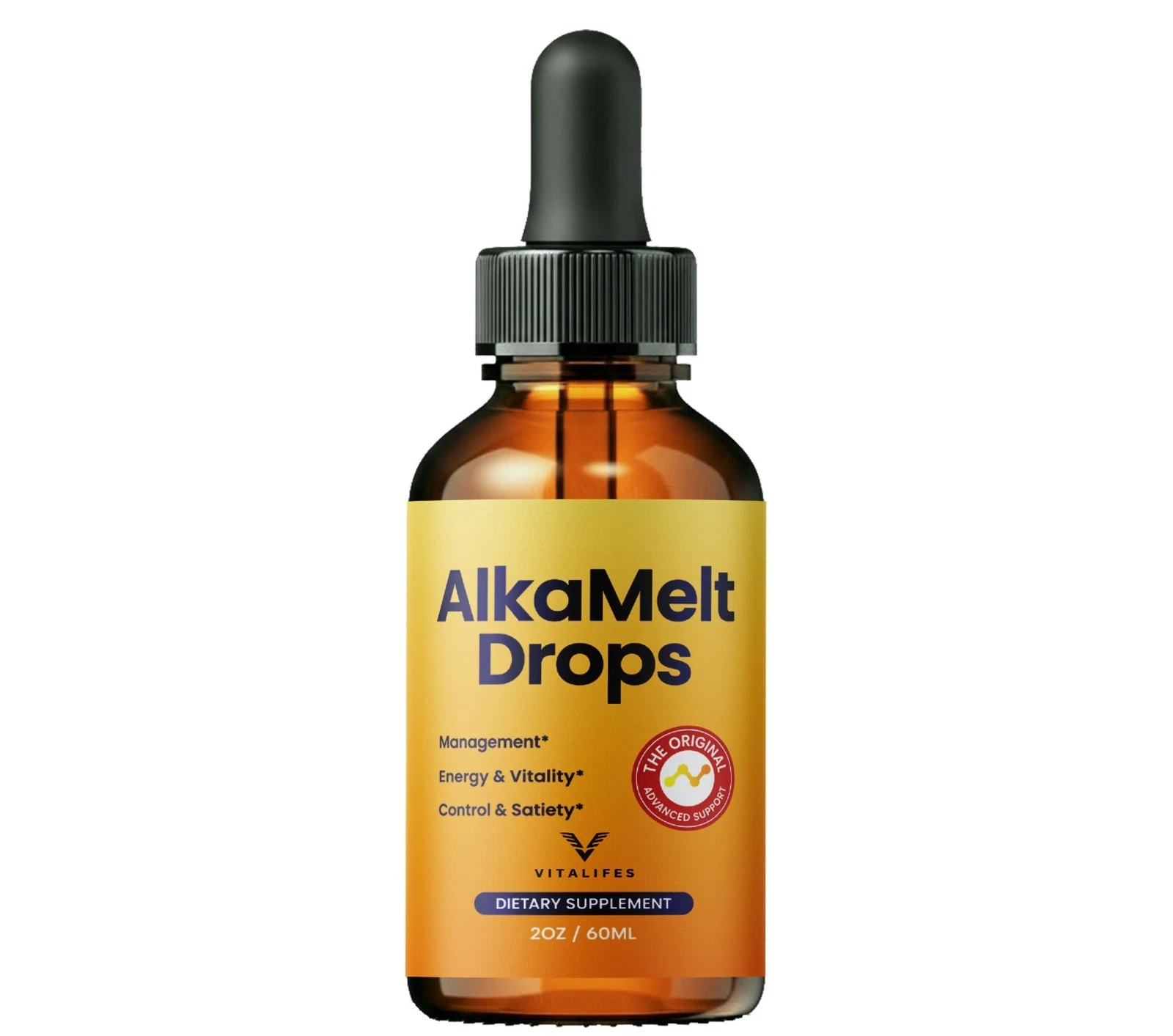
The plain answer is the one on your bottle. The front label gives neither a serving size nor a drop count. Because of that, this site prints no count. A number invented here could not be checked against anything, and a reader is most likely to act on exactly that line.
Why not give a safe-sounding figure? Because a dropper is not a unit. It can be squeezed fully, squeezed halfway or just tapped, and each gives a different amount of every ingredient. Two people with the same loose instruction can take amounts far larger or smaller than each other’s, and both think they followed it.
What are the 5 steps for finding your Alka Melt Drops dosage?
Read the directions on the bottle in your hand
This is the one document able to set the serving. Look at every side. The seller’s photos show only the front, so a serving line may sit where no photo reaches.
If the bottle is silent, call the order desk
Ring +1 (302) 200-3480 and ask what the current batch is labelled with. Do not use a figure from a listing or an advert. Listings reuse copy, and the seller says ads and bottles do not always match.
Treat the directions as a ceiling
With no declared amount for any ingredient, you cannot judge a cautious dose from a risky one. The site’s advice is to treat the directions on the bottle as a limit, not as a place to start and then climb.
Keep the amount the same each day
The site’s view is that with no guidance on the bottle, a small, steady amount is the only approach it can defend. A steady amount is the only kind you can assess, tweak or describe to a doctor. Ask your doctor what is right for you.
Write it down and tell your doctor
Note the amount, the time and the date you started. If you take any medicine, show your doctor the bottle and the lists. Hawthorn and digoxin is the clearest interaction named on the pack sheet.
Why does this site print no drop count?
There are three reasons, and they are all about honesty. The label states no serving. The seller’s own how-it-works artwork goes no further than “a liquid serving” and “follow the label”. And a made-up count would be the single statement on the whole site that a physical bottle could contradict.
Other sites may print a number. The site adds that numbers lifted from a third-party retail site describe a product that site presents differently on four other counts. We agree. It is better to have no number than a wrong one.
What did the research use, and why is it not your dose?
The label gives no amount, so the site prints the amount each ingredient’s own research used. This lets you compare. It does not tell you what is in the dropper.
| Ingredient | Label says | Research dose |
|---|---|---|
| Gotu kola extract | None printed | 60-120 mg a day of a titrated extract |
| Chinese hawthorn extract | None printed | 900-1800 mg a day of WS 1442; only 1800 beat placebo |
| Horse chestnut extract | None printed | 600 mg a day as a seed extract holding 100 mg aescin |
| Stone root extract | None printed | No human trial exists at any dose |
| Motherwort extract | None printed | No human trial exists at any dose |
| Butcher's broom extract | None printed | 150 mg, given with 150 mg hesperidin methyl chalcone and 100 mg vitamin C |
| Grape seed extract | None printed | Pooled controlled trials, with dose-response analysis |
| Apple cider vinegar | None printed | 30 mL a day, for up to 12 weeks |
| Raspberry ketones | None printed | No human trial of the compound on its own |
| Wild yam extract | None printed | 24 mg a day of Dioscorea alata, for 12 months |
| Bitter melon extract | None printed | 2000 mg a day, for 3 months |
Every milligram figure here is a trial’s figure, printed for comparison. None is this bottle’s.
Two details help you read the table. Horse chestnut is the sharpest case. Its trials used a standardised extract, and a drop of unstandardised extract is not the same product. And the vinegar figure shows how far off a dropper can be: with 30 mL taken daily, a 60 mL bottle runs out in two days.
How many days will one bottle last?
No one can say from the front label. The site notes that a full dropper delivers roughly a millilitre, so 60 mL holds roughly sixty full droppers. How many you use a day is set by the directions on the bottle.
That is why the pricing page lists packs by volume and not by days. It also means that cost per day cannot be worked out before the bottle arrives.
| Pack | Total volume | Price |
|---|---|---|
| 1 bottle | 2 fl oz | Shown at checkout |
| 3 bottles | 6 fl oz | Shown at checkout |
| 6 bottles | 12 fl oz | Shown at checkout |
The site prints no price. Packs differ only in how many bottles arrive.
Is taking more faster or better?
Nobody knows. With no declared serving and no dose-response work on this product, taking more of an unknown amount, faster, has nothing to support it.
There is a safety side too. Three of the seven pack-sheet botanicals carry bleeding cautions. One interacts with a heart drug. The site says a caution is normally read against an amount, and here no amount is printed. For that reason, do not go above the directions, and ask a doctor first if you take a blood thinner or digoxin.
Frequently asked questions
How many Alka Melt Drops should I take a day?
Do what the bottle says. Its front label gives no serving size and no drop count, so you will find no number here. If the bottle says nothing, ring the order desk on +1 (302) 200-3480.
Why does the site not give a drop count?
A made-up count could be contradicted by the physical bottle, and it is the line a reader would most likely act on. The label declares no serving, so the site prints no number.
What dose did the trials use?
In horse chestnut trials the dose was 600 mg a day of a seed extract holding 100 mg aescin. In hawthorn trials it ranged from 900 to 1800 mg a day, and only the top dose beat placebo. Those are trial figures, not this bottle's.
Can I take more to feel it faster?
No one knows, because no serving is declared and nobody has studied doses of this product. Stay within the bottle's directions, and ask a doctor if you take any medicine.
How many days will one bottle last?
It depends entirely on the directions the physical label sets, so the site cannot say. A bottle holds 60 mL, and a full dropper delivers roughly a millilitre.
Is the amount different for men and women?
The label names no sex and sets no serving for anyone. Follow the bottle, and ask your doctor about what suits you.
Our view
People search for a number because a number feels safe. Here the honest answer is that no published number exists. Anyone who gives you one is guessing.
That does not leave you stuck. The bottle, the order desk and your doctor are three real routes, and they are the right three. Keep the amount steady, write it down, and never go above the directions.
The label gap is the real cost of this product, and we say so plainly. Like every supplement, it is not FDA approved, and it does not treat any disease.
To read those directions on a real bottle, you would order through the checkout. Nothing here replaces the label or your doctor.
See today’s price and guaranteeYou will find the price only at checkout, because none is printed here. This site is the retailer, and it earns from orders made through its checkout.
Last updated . Medically reviewed by Dr. Chioma Okafor-Mbah, MD, Physician, on the same date.
Sources named on this site
- the Cochrane horse chestnut review – https://pubmed.ncbi.nlm.nih.gov/23152216/
- the WS 1442 dose-ranging trial – https://pubmed.ncbi.nlm.nih.gov/12040357/
- the placebo-controlled Ruscus trial – https://pubmed.ncbi.nlm.nih.gov/12040966/
- a 2025 meta-analysis of apple cider vinegar – https://pubmed.ncbi.nlm.nih.gov/41010525/
- Johnston's vinegar dosing work – https://pubmed.ncbi.nlm.nih.gov/20068289/
- an analysis of weight-loss supplement labels – https://pubmed.ncbi.nlm.nih.gov/39770990/
- the Dietary Supplement Ingredient Database work – https://pubmed.ncbi.nlm.nih.gov/31505677/