Alka Melt Drops Official Website › Blog › A Bottle With No Panel
A Bottle With No Panel: What That Actually Changes
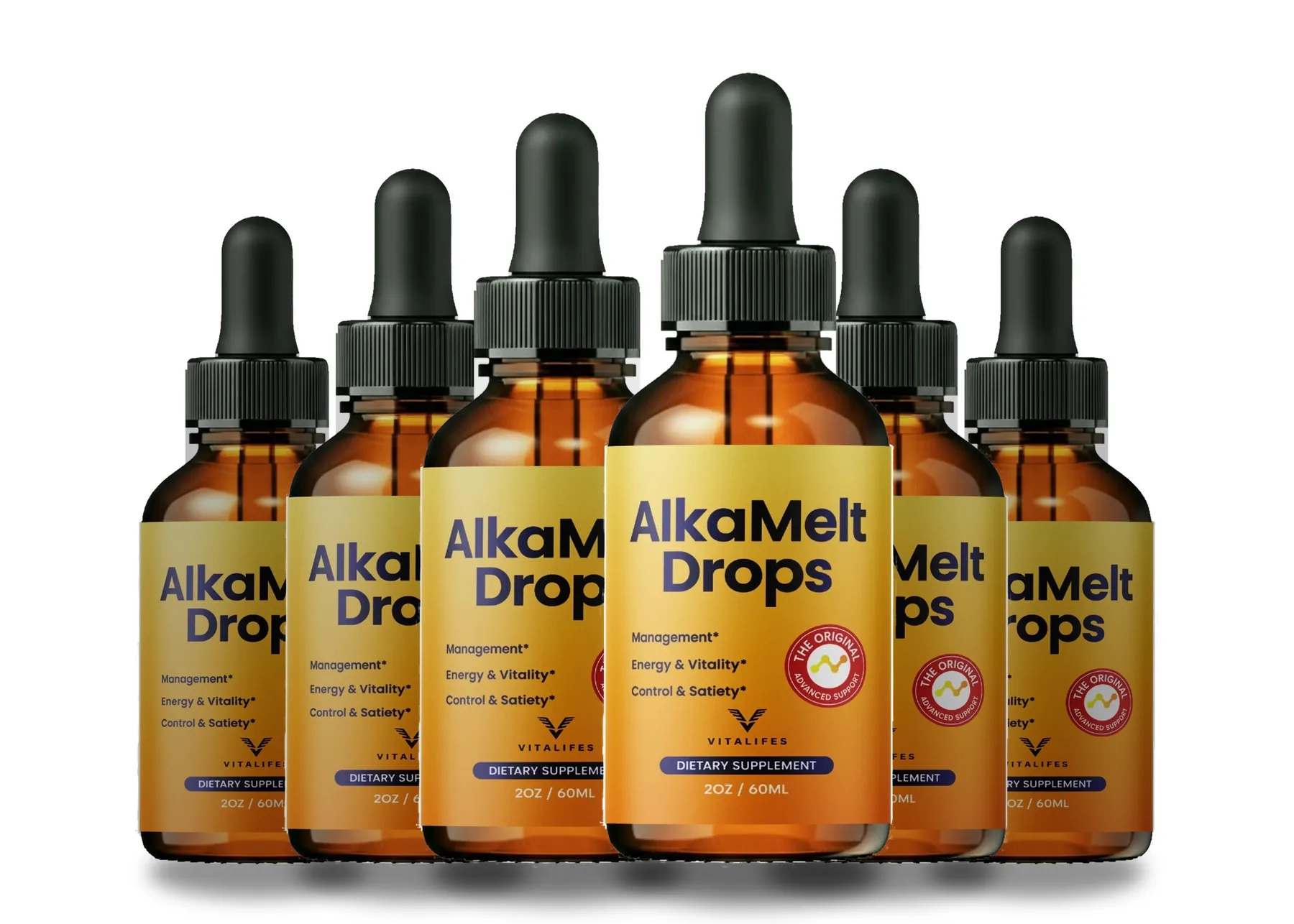
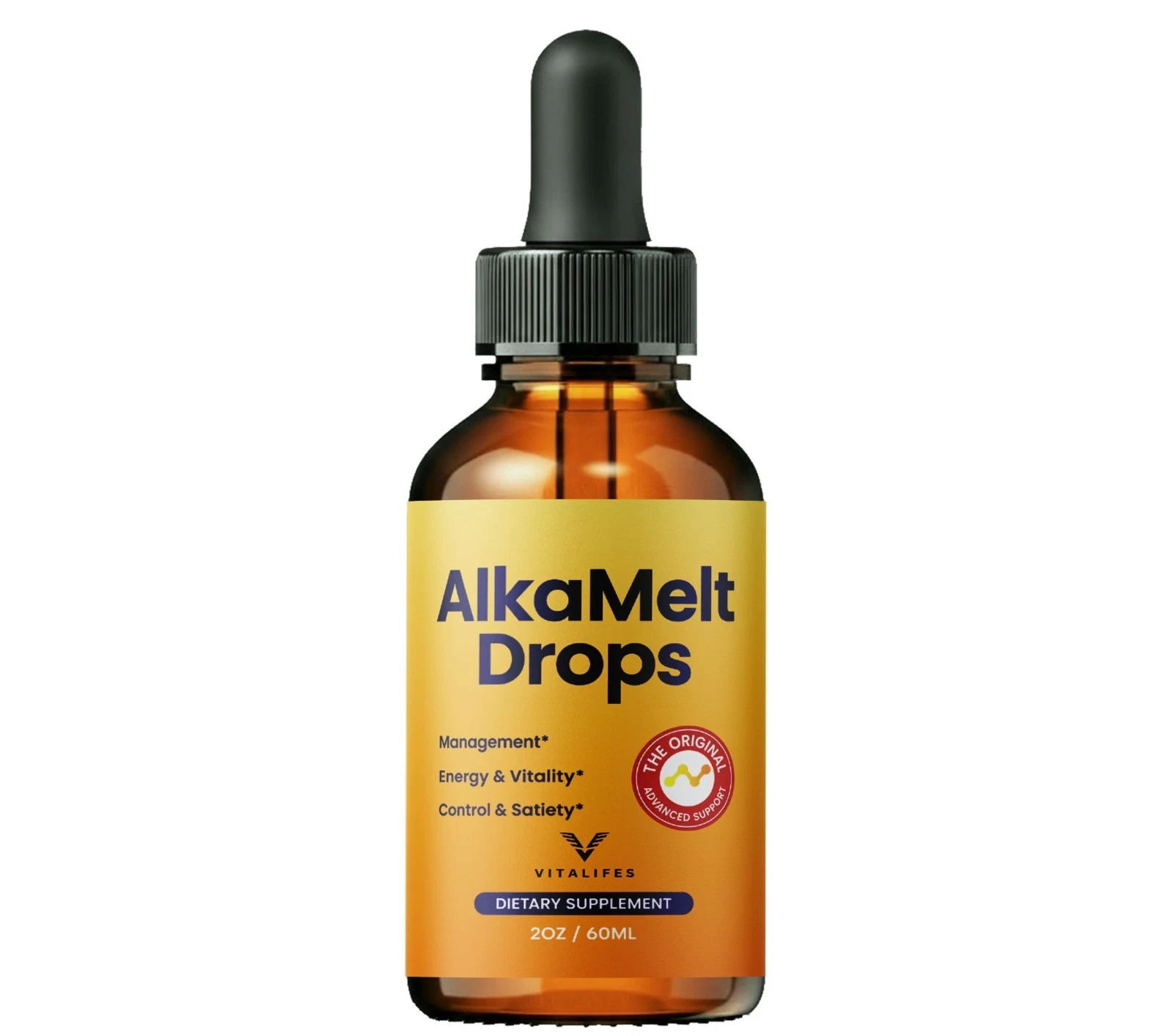
A Supplement Facts panel is a boxed table with a serving size at the top and a row for every ingredient beneath it. The front wrap on this bottle has none. That single absence decides more about what a buyer can check than any ingredient on any list.
- A panel is a defined object. It carries a serving size, one row per ingredient, an amount against each and a percent Daily Value where one applies.
- This wrap carries the product name, three starred phrases, the maker’s mark, the category line, the net contents and a roundel.
- Without a serving size, no arithmetic a reader does on the bottle volume means anything.
- Without amounts, the comparison this whole category rests on — label figure against trial figure — can only be run on one side.
- Four workarounds exist and all four fail, which is worth knowing before spending an evening on them.
What a panel is, exactly
A Supplement Facts panel is not a design convention. It is a defined object with a required shape, and everybody who has turned a bottle over has seen it: a black-ruled box, a serving size on the first line, servings per container underneath, then a column of ingredient names with a weight beside each and a percentage column on the right where a Daily Value has been established.
Underneath the box sits a line beginning “Other ingredients”, which is where the carrier, the preservative and the flavouring go. On a liquid product that line is often the more interesting of the two, because it tells you what the active names are suspended in.
The shape matters because it makes bottles comparable. Two products with panels can be held side by side and read in about thirty seconds. Two products without them cannot be compared at all, whatever else is printed on either.
| What a Supplement Facts panel carries | On this front wrap |
|---|---|
| Serving size, at the top of the box | no serving size anywhere on the artwork |
| Servings per container | absent; the net contents stand alone |
| One row per ingredient, named | no ingredient row of any kind |
| An amount beside each name | no amount for any name |
| Percent Daily Value where one exists | no percentage column |
| An “other ingredients” line beneath the box | no such line |
| Net contents | 2 fl oz / 60 mL, which the wrap does state |
Seven things a panel is built to carry. The wrap carries the last of them.
The first six rows of that table are what a reader loses. The seventh is what survives, and it is worth noting that the net contents are stated clearly and prominently: the wrap is not careless. It carries what it carries deliberately.
What this wrap carries instead
Read down the bottle and the front wrap sets out six things in order. The product name in two lines across the gold. Three support phrases, each with a small star beside it. The maker’s wordmark under a bird device. The words DIETARY SUPPLEMENT reversed out of a navy bar. The net contents. And a red roundel.
The three starred phrases are the claims, and the star is doing real work: it points at the standard Food and Drug Administration statement that these statements have not been evaluated and the product is not intended to diagnose, treat, cure or prevent any disease. That is the correct construction and the wrap gets it right.
The navy bar is also informative. DIETARY SUPPLEMENT is a regulatory category rather than a description, and it sets the terms on which everything else is sold. A reader who takes only that line away has taken away something true.
What the roundel adds
The red circle reads THE ORIGINAL, ADVANCED SUPPORT. It names no comparison, no date and no competitor, so there is nothing in it a reader could check even in principle. It is the one element on the wrap that carries no information at all, and this desk treats it as decoration rather than as a claim.
See every published Alka Melt Drops list side by side
Four lists, 17 distinct names between them, each one attributed to whoever published it, with the dose its research used printed beside it. A 2 fl oz / 60 mL amber glass dropper bottle, and the pack price at the seller’s checkout.
Price at checkout · one-time payment · money-back guarantee as printed on the listing
Order Alka Melt Drops On The Official Website2 fl oz / 60 mL amber glass dropper bottle · lot ALK-26/TH-2256
The comparison a panel makes possible
Everything useful this desk does on an ingredient page is one comparison repeated: the amount on the label beside the amount the trials used. It is a simple operation and it settles most arguments in this category within a minute.
Horse chestnut is the clean example. The controlled trials ran at 600 mg a day of seed extract standardised to 100 mg of aescin. A label printing 600 mg of a standardised extract has matched the research. A label printing 50 mg has not, and no amount of enthusiasm in the surrounding copy changes the arithmetic.
That comparison needs two numbers. The trial side is public and settled: it sits in the abstract of the paper, and the Dietary Supplement Ingredient Database work exists precisely because researchers wanted amounts they could rely on. The label side is where this bottle leaves the column empty.
Why that is worse than a small dose
A label printing a small amount has told you something, and you can decide what to do with it. A label printing nothing has told you the seller either does not know or is not saying, and there is no third reading of it. The first is a formulation problem the buyer can weigh. The second is a disclosure problem the buyer cannot.
Four workarounds, and where each one stops
Anybody who has tried to research one of these bottles has attempted at least two of the four below. They are all reasonable and they all fail, and knowing where each one fails saves the evening.
| The workaround | Why a reader reaches for it | Why it does not work |
|---|---|---|
| Copy the list from a stockist | Somebody has clearly typed one out somewhere | Four parties publish four different lists for this product and they share almost nothing |
| Assume the order of names is the order of amounts | A panel is ordered by weight, so a list might be | That convention belongs to the panel. A marketing list is ordered for reading |
| Divide the bottle by an assumed serving | 2 fl oz / 60 mL is a known quantity, so arithmetic feels available | The serving is the unknown. Dividing a known total by a guess produces a guess |
| Read across from a similar product | Formulas in a category look alike | Two of the four lists here share no names at all, which is how little alike they can be |
Four honest attempts to work around a missing panel, and the point at which each one stops.
The third row is the one people spend longest on. Two fluid ounces is sixty millilitres, a millilitre is commonly about twenty drops, and it is very tempting to build a serving out of that. But the number of drops per serving is the unknown, and multiplying a known volume by an unknown frequency produces nothing a reader should act on.
What a missing panel does not mean
Three conclusions do not follow, and all three are drawn regularly in this category by people arguing in good faith.
It does not mean the bottle is empty of what the pack sheet names. No analysis of this product exists in public in either direction, and this desk holds none. The absence of a panel is an absence of evidence, which is a different thing from evidence of absence.
It does not mean the seller is hiding something specific. The likelier explanation across this whole category is a front-wrap design that was never built to carry a panel and a photography set that only ever shot the front. That is a process failure rather than a concealment, and it is extremely common.
And it does not mean the ingredients are badly chosen. Four of the seven botanicals on the pack sheet have some of the better evidence in herbal medicine behind them. What they do not have, on this bottle, is an amount.
Work on chemical analysis in supplement liver-injury cases makes the practical point from the other end. When something goes wrong with a supplement, the investigation begins from what the label said was in it. A product with no ingredient statement gives that investigation nowhere to start, and that is the one circumstance in which a missing panel stops being an inconvenience.
What a buyer can still establish
Plenty, as it happens, and it is worth listing because the alternative is concluding that nothing about the product is knowable.
- The category and the claims. Three starred phrases and a regulatory category line, all printed on the wrap and all checkable against it.
- The format and the volume. Liquid drops, amber glass, dropper cap, 2 fl oz / 60 mL, stated plainly.
- The maker’s mark. VITALIFES, with a bird device, on the front.
- The named list the distributor stands behind. The retail pack sheet’s seven botanicals, which is the seller’s own document rather than a stockist’s guess.
- The research behind each of those names. Public, searchable, and printed with its dose on the ingredients page.
- The commercial terms. A telephone desk, a returns address, a five-step refund process and a window whose length the listing prints at checkout.
That is a real list and it is more than several sellers in this category offer. What is missing from it is the one item that would let the fifth entry be joined to the fourth, which is the whole of the complaint.
The one change that would fix all of this
A panel. Not a longer marketing page, not more seals and not a third ingredient list: a boxed table on the back of the bottle with a serving size and a weight against each name.
It would settle the serving question in one line, make the dose comparison runnable on both sides, and resolve by implication which of the four published lists reaches the bottle. One printing change, and three of the four honest criticisms this website makes of the product would disappear.
An analysis of labels in this category found printed content and analytical content parting company often enough to be a documented problem, and the field-wide review describes a literature of small, short studies. Neither of those is solved by a panel. But both of them can at least be argued about when one exists, and that is the difference between a product a reader can assess and one a reader can only trust.
References
- Crawford C, Avula B, Lindsey AT, et al. Label Accuracy and Quality of Select Weight-Loss Dietary Supplements Sold on or near US Military Bases. Nutrients. 2024;16(24):4326. PMID 39770990. https://pubmed.ncbi.nlm.nih.gov/39770990/
- Andrews KW, Gusev PA, Dwyer JT, et al. Dietary Supplement Ingredient Database (DSID) and the Application of Analytically Based Estimates of Ingredient Amount to Intake Calculations. J Nutr. 2018;148(suppl_2):1413S-1421S. PMID 31505677. https://pubmed.ncbi.nlm.nih.gov/31505677/
- Halegoua-DeMarzio D, Navarro VJ, Ahmad J, et al. Investigation of the Role of Chemical Analysis in Causality Assessment of Herbal and Dietary Supplement-Induced Liver Injury. Drug Saf. 2025;48(2):143-150. PMID 39354283. https://pubmed.ncbi.nlm.nih.gov/39354283/
- Batsis JA, Apolzan JW, Bagley PJ, et al. A Systematic Review of Dietary Supplements and Alternative Therapies for Weight Loss. Obesity (Silver Spring). 2021;29(7):1102-1113. PMID 34159755. https://pubmed.ncbi.nlm.nih.gov/34159755/